
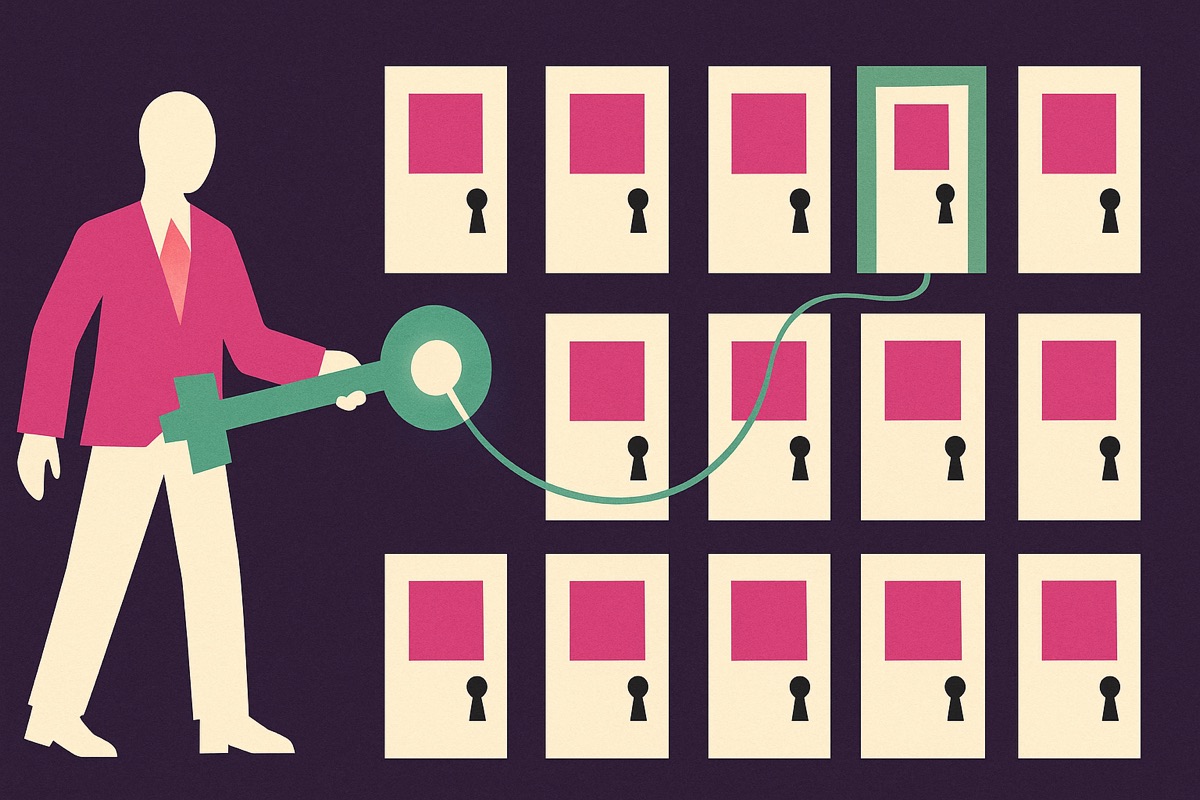
How do we find the one story that unlocks everything?
“We know if we could just find the right story, everything would unlock.”
The short answer
The right story already exists inside the company. It lives in the founder's head, in what your best customers say about you, and in the fight you picked with your industry. The work is extraction: pulling that truth out of the leadership team, settling the arguments, and writing it down as a Magnetic Messaging Framework that people and AI can both use.
64 articles on this problem, written by Greg Rosner from inside the work with $5M-$75M B2B companies.
Start Here

How we build a B2B messaging framework and put it to work in 90 days
Your homepage rewrite is waiting on a sentence your leadership team still can't agree on. You could put another meeting on the calendar. You could ask AI for twenty versions. Neither gives you a way to decide which version is true.
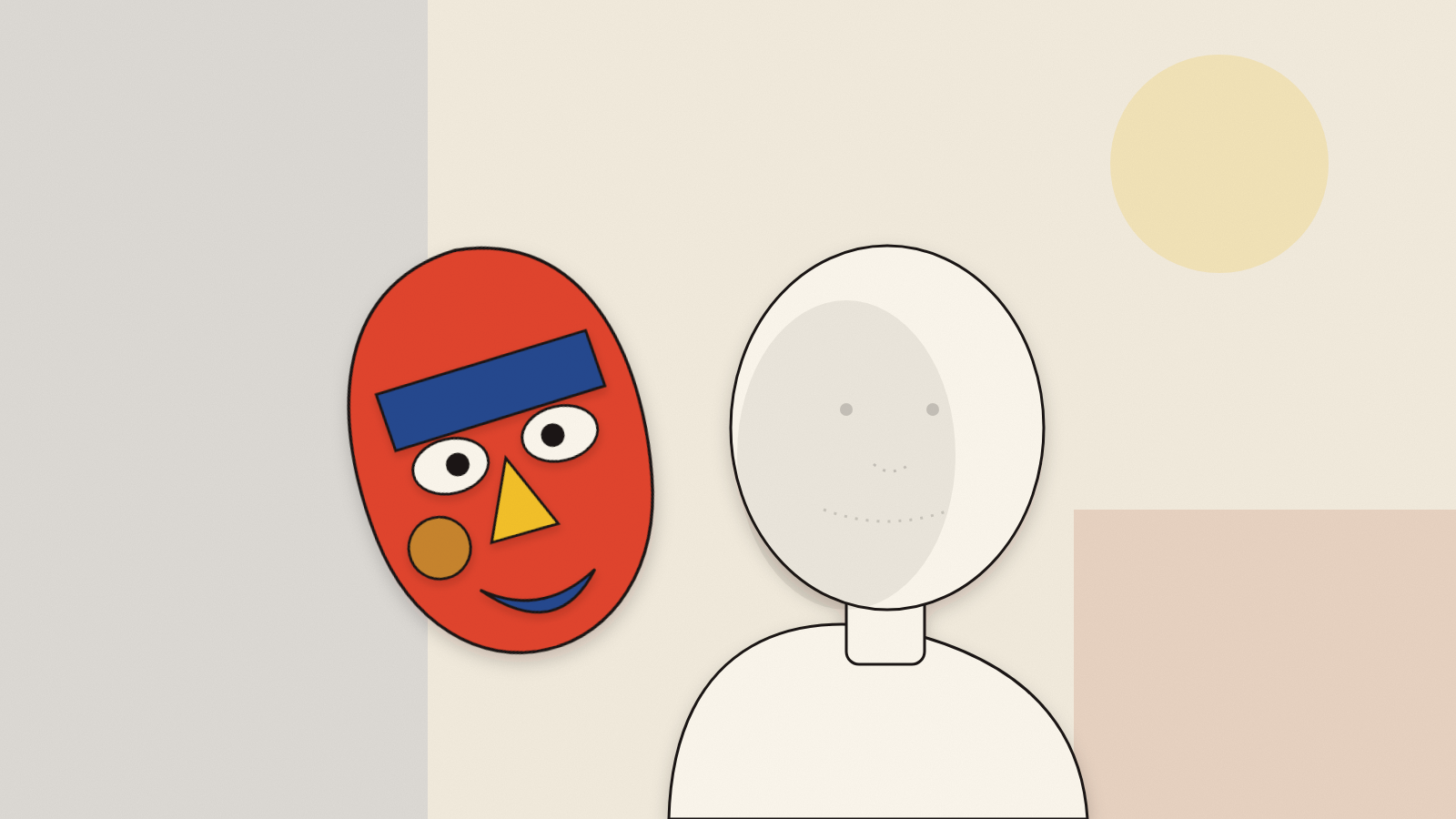
Brand identity vs narrative identity: which one do buyers actually decide on?
You approved another brand refresh. New logo, cleaner palette, a typeface with opinions. It looks sharp. And it still feels like a stranger is describing your company. Here's the hard part nobody says before they invoice you: a rebrand fixes your visual identity, the skin you can see. The part that wasn't landing was your narrative identity ... who you are, who you're for, what you stand for, and the story you actually live. AI made the logo and the volume nearly free, which means the look is table stakes and the narrative is the moat. Here's why founders keep reaching for the look, why that reflex costs more now, and three tests to tell which identity you've actually been fixing.

How do you develop brand messaging for a tech startup? (step by step)
Nine in ten tech startups build the message last. Here's the four-anchor step-by-step sequence that fixes it: category design, villain framing, old-way / new-way contrast, and promised-land outcome.

What's the best way to test new positioning messaging?
Most B2B positioning messages are debated internally and never tested externally. The Three Questions Test is a five-step methodology for validating a message with real ICP buyers before it goes anywhere near the homepage, the deck, or the email sequence.

Category design vs positioning: which does your B2B company need?
Category design and positioning get confused constantly. Here's the teaching guide on how they actually differ, which one most $5M-$75M B2B companies need right now, and why the sequence matters.
Every article on this problem
- What actually happens in a two-week brand sprint, and what does it leave unfixed?
A two-week brand sprint is ten working days and it buys articulation: your leadership team's existing beliefs, said well. Here's the day-by-day agenda, the dependency hiding in each stage, and the four things ten days structurally can't reach.
- How long does a B2B rebrand take, and what does each phase cost?
A full B2B rebrand runs four to eight months and $65,000 to $260,000 across six phases. Here's the timeline and the cost of each one, plus the phase that decides whether the other five stay on schedule.
- How do we run a repositioning without breaking what's already working?
A B2B repositioning runs in six steps, and five of them are easy. Here's the sequence, the decision that sits inside each step, and the equity you protect on the way through.
- We're pivoting. Do we announce the new story or grow into it?
A CEO told me his company had changed completely in eighteen months, then shared a homepage that still described the company he started. He wasn't lazy. He was waiting to feel ready. Meet the Trailing Story, and the three tests that tell you how far behind your evidence actually is.
- We're 18 months from a raise. Is our story an asset or a discount?
A founder showed me the data room he'd spent four months building, then showed me the homepage a buyer reads first. The numbers were airtight. The story took nine minutes to explain out loud. Here's the part nobody says at the kickoff: diligence teams price what they can verify fast, and everything else lands in the risk column. Meet the Clarity Discount, and the three tests that find yours while there's still time to change the answer.
- Why do our messaging interviews give us answers we already had?
Discovery interviews hand back the answers you walked in with because the questions asked you to summarize. Truth extraction asks for episodes instead, and what comes out is the sentence you've never written down.
- How do we break into large enterprise accounts?
Large institutions buy against a funded agenda, not a capability list. Here's the narrative that gets a growth-stage company through the door, plus the three homepage signals that decide whether anyone opens it.
- What actually gets rewritten when we rebuild our messaging?
Three things get rewritten in almost every B2B messaging rebuild, and the product description you agonized over usually isn't one of them. Here's what changes, what survives, and the order it has to happen in.
- Should we hire April Dunford or Andy Raskin to fix our positioning?
Dunford fixes what you're compared to. Raskin fixes why anyone should move now. Here's an honest read on both schools, a three-check diagnostic to tell which problem you have, and the case where neither workshop is the answer.
- The First-Sale Ceiling: why your biggest accounts stop growing at the problem you sold them on
A CEO showed me a slide last week: 340 customers, six products, 1.4 modules per account. He'd hired a customer marketing director, built in-app upsell prompts, run a webinar series. Nothing moved. Then I asked what his customers say he does, and he answered in four words without pausing.
- What does a messaging engagement actually deliver, and how do you know it worked?
A messaging engagement delivers a documented narrative identity your team and your AI can both execute, plus the leading and lagging metrics to prove it moved buyers. Here's exactly what you get and how to measure it.
- Why does our board keep funding more leads instead of a better message?
A cybersecurity CEO had eleven marketing metrics on his board slide and every one of them was a count. He could name the real problem in ten seconds with the deck closed. There was nowhere on the slide to put it, so the board funded more of the lever he already knew was stuck.
- The Offsite Trinity: why mission, vision, and values can't sell your product
This week a CEO showed me the output of a two-day leadership offsite: a mission, a vision, five values, all wordsmithed to a shine. Ninety days later his pipeline hadn't moved. I asked him to read me the mission statement and name one competitor who couldn't say it word for word. Long pause. The Offsite Trinity answers questions your team cares about. A buyer is asking different ones, and your homepage only gets to answer one set.
- Repaint Reflex: why we buy a rebrand when what's actually broken is the position
A rebrand changes what your company looks like. A repositioning changes what it means. Most B2B companies buy the first when they need the second, because surface is easier to scope than an argument.
- Story Anesthesia: why a great story hides a broken position instead of fixing it
Storytelling and positioning are different jobs, and only one of them can be broken first. Here are the three tests that tell you which one you're actually paying to fix.
- Census Segments: your target market list counts companies, it doesn't find buyers
Most B2B companies segment their market by industry, headcount, and tech stack. That's a census, not a segmentation. Here's the three-question test that finds the segments that actually predict buying.
- Win Amnesia: how to mine win/loss calls for the language that actually closes deals
Every B2B company runs a loss autopsy. Almost none run a win debrief. That asymmetry is Win Amnesia, and it's why the language that actually closes your deals never makes it out of the recording.
- Naming Rights: why the company that names the problem owns the market
A buyer asked my client how his product handled a problem, using the two-word phrase a weaker competitor coined last year. That's the Rented Vocabulary at work: buyers interviewing you in someone else's words. Why the company that names the problem ends up owning the conversation, and three tests to find out whose words you're speaking.
- Echo Work: what to expect in the first 30 days of a messaging engagement, and the red flag most founders miss
A good first month produces almost nothing you can put in a board deck. That's the point. When a polished artifact lands in week two, it means the firm built from your website instead of from your people, and you're already three months from finding out.
- The Consensus Edit: why your sharpest line never ships
Nine reasonable people and 214 comments turned a true headline into wallpaper. The Consensus Edit is the review loop that grinds every sharp claim down to comfortable mush, and it's running your copy approvals right now. How to spot it in your version history and end it this week.
- Protopian Marketing: why small, true claims beat the 10x promise
My friend Kevin Kelly finally wrote out his case for protopia... the future that gets one percent better and compounds... and it landed the same week a $19M SaaS CEO admitted he doesn't believe his own homepage headline. Meet Utopian Copy: why buyers built an immune system against transformation promises, why AI made hype worthless overnight, and three tests to find out if your homepage is selling a future nobody believes. The fix has a name: Protopian Marketing.
- PitchKitchen vs Punchy (Emma Stratton): train your marketers or rebuild the founder's story?
Emma Stratton's Punchy trains B2B tech marketers to write clearer, less jargon-choked messaging, and she's genuinely elite at it. PitchKitchen settles the narrative identity underneath the writing with the CEO in the room, then trains an AI Brand Twin on it. Here's the honest head-to-head, the five questions that tell you which layer your problem lives on, and why craft training on an undecided story just fails more articulately.
- Why does our messaging stop working when we move upmarket?
The board said go upmarket, and he did everything the playbook says: enterprise AEs, SSO, audit logs, a SOC 2 badge, an Enterprise tier with a 'Contact us' button. Seven months later the mid-market machine still closes in 45 days and the enterprise deals won't close at all. Here's what the pipeline review doesn't show: the story under the badge still speaks to a buyer who could decide alone. Meet the Enterprise Costume, why AI just made looking enterprise-ready free, and three tests to run before you ship more product at a stalled upmarket motion.
- Is Your Message Easy to Repeat? Why Everyone Tells a Different Story, and AI Gets Your Value Wrong
The real test of a clear message isn't whether it sounds smart on your homepage. It's whether your salespeople, your employees, your partners, and your customers all tell the same story. When everyone tells a different one, buyers get the average, and ChatGPT gets the average of the average, so it hands the deal to a competitor it could actually summarize.
- Why do we keep rewriting our messaging and it never feels finished?
You've rewritten the homepage four times this year and none of it feels done. That's not a clarity problem you can polish your way out of. It's the Permanent Beta, the message you keep optimizing and never commit to, so the market never hears one version long enough to learn it. Here's why refining and rewriting are opposite acts, a three-test diagnostic to run before your next rewrite, and the fix that finally lets a $5M-$75M B2B company stand still long enough to be remembered.
- What should a B2B rebrand actually change, and what should it leave alone?
Most B2B rebrands change the logo and leave the story untouched, then wonder why the pipeline didn't move. Here's the scope test for what a rebrand should change, and the equity it should never blow up.
- How do we unify our brand messaging after an acquisition?
After an acquisition, the reflex is to bolt two stories together: keep both value props, both taglines, both feature lists. The market hears two companies and AI cites the clearer competitor. You don't unify by combining. You unify by deciding on one story ... and it's usually already in your deal thesis.
- How do you get a leadership team to finally agree on the company's core message?
You don't get a leadership team to agree on the core message by discussion or vote. You surface each leader's private version, then resolve the gaps against customer evidence. Alignment is what you get after the decision, not instead of it.
- Why does our messaging start over every time we hire a new marketing leader?
Every new marketing hire inherits no written source of truth, so they rebuild the message from their own playbook and the story starts from zero again. Here's why the Blank-Slate Reset keeps a $5M-$75M B2B company invisible, to buyers and to AI, a three-test diagnostic, and the fix that finally makes your message an asset instead of a hire.
- Should the founder be the face of the brand, or does that make a B2B company look too small?
Making the founder the face of the brand doesn't mean looking like a one-man show. It means your point of view is in the message instead of scrubbed out to look bigger. Here's why hiding the founder makes a $5M-$75M B2B company invisible, and the fix that scales past you.
- How long does it take to fix B2B positioning? A realistic 90-day timeline
Fixing B2B positioning takes about 90 days when it's run as a structured project instead of a rewrite. Here's the honest week-by-week timeline, the five things that stretch a quarter into a year, and what decides your finish line.
- Why does our messaging keep sliding back to features after we fix it?
This week a $19M Series B founder pulled up the homepage we clarified eight months ago, and it had quietly turned back into a feature list. Nobody rewrote the core copy on purpose. It crept. A capability line here, a new integration there, and the outcome story that used to open the page is now buried under a spec sheet. He thought the message went stale. Here's the harder truth: the message didn't decay, it fell. There's a gravity to it, and if you don't build something to hold it up, it drops back to describing what you built instead of what changes for the buyer. Here's why the fix never sticks, why AI makes the fall faster, and three tests to catch it before your win rate does.
- Category design vs positioning vs strategic narrative: which does a $5M-$75M B2B company need?
Category design, positioning, and strategic narrative get used like synonyms. They're three different tools for three different jobs. Here's what each does, who owns the idea, and which one a $5M-$75M B2B company actually needs first.
- How do you message a B2B company with multiple products without confusing buyers?
A multi-product B2B company confuses buyers when its homepage becomes a catalog. The fix isn't a shorter list. It's one narrative spine, the transformation all your products deliver, that every product ladders up to. Here's how to find it and why it matters more now that AI briefs your buyers first.
- What does a brand positioning workshop for a leadership team actually look like?
A brand positioning workshop gets a founder and their executives in one room to agree on who they're for, what problem they kill, and why a buyer picks them. Here's the agenda, the format, and what you walk out with.
- What is message drift, and how do you keep brand messaging consistent across channels?
Your homepage, deck, LinkedIn, and sales calls each describe a slightly different company. That's not a writing problem. It's message drift, and in the AI era it's what makes buyers and machines pass you over.
- How do you simplify complex B2B messaging without dumbing down the product?
A cybersecurity CEO shared his screen this week and walked me through his homepage. Ninety seconds in he was three layers deep in his detection architecture and lit up about it. Then I asked him to say what he does in one breath, and it came out forty seconds long with 'orchestration' in it twice. Here's the trap almost every technical founder falls into: they think simplifying the message means dumbing down the product, so they keep the explanation as complex as the build. It doesn't. You simplify the door, not the building. AI made over-explaining free and made it fatal, because the machine briefing your buyer can only repeat what it can compress. Here's why the smartest founders write the worst homepages, and three tests to tell if yours is a door or a wall.
- MMF vs StoryBrand vs Obviously Awesome vs Fletch: Which B2B Messaging Method Actually Fits in 2026?
StoryBrand, Obviously Awesome, Fletch, and the Magnetic Messaging Framework don't solve the same problem. Here's an honest, side-by-side comparison so a $5M-$75M B2B founder can pick the right one ... including the AI-readiness layer almost none of them are built for.
- Product-market fit vs message-market fit: why selling stays hard after PMF
You found product-market fit. Customers stay, expand, refer. Why is cold pipeline still such a grind? Because product-market fit and message-market fit are two different fits, and the second one never comes free with the first. Here's the gap, why your warmest early customers hid it from you, and a 3-test diagnostic to find it.
- Should a B2B company use one message or industry-specific messaging?
If you sell into several industries, the instinct is to build a separate message for each one. That's usually how a company ends up with no message at all. The fix is one narrative, many proofs: keep the story constant, flex the evidence by vertical.
- What is the Magnetic Messaging Framework, and how is it different from positioning or brand strategy?
The Magnetic Messaging Framework is a strategic narrative system that decides and documents what your company says and why buyers should care. Positioning is one decision inside it. Brand strategy is the wider identity work around it. Here's the difference, and which one you actually need.
- Should we niche down, or will it cost us deals?
This week a founder told me he was scared to niche down. His homepage said he helps companies of every size, across every industry, and he was sure that narrowing it would shrink his market and cost him deals. Here's the part that's hard to hear: narrowing your message isn't narrowing your market. You're choosing who to speak to, not who you'll sell to. A message built for everyone is exactly the one that makes you invisible, because nobody feels personally addressed. Call it the Wide-Net Reflex, and it's quietly costing you the deals you think it's protecting. Here's why it happens, why AI makes it worse, and three tests to catch it.
- We've outgrown our messaging. Why does it still describe our old company?
This week a founder walked me through how far his company had come ... new products, a bigger buyer, triple the revenue from a few years ago. Then he showed me the homepage, and it described a company that no longer exists. The first product, the original small promise, the words from when they were a fraction of the size. He thought the message had gone stale. Here's the hard part nobody says: the message didn't break. He outgrew it, and nobody ever went back to rewrite the story to match the company he actually built. AI made it worse, because the machine briefing his buyers reads that frozen page and describes the smaller, older company too. Here's why this happens, why it's worse now, and three tests to spot the Founding Fossil running your message.
- Brand messaging examples from B2B SaaS companies (and why they work)
The strongest B2B SaaS brand messaging all makes the same move: it leads with a named enemy and the buyer's world, not a feature list. Here are seven real examples ... Salesforce, Slack, Gong, Drift, Stripe, HubSpot, Superhuman ... and the exact move each one makes.
- How do you create a new market category? (without a Play Bigger budget)
Creating a category isn't a budget line, it's a sequence of decisions about language. Here's the step-by-step way a $5M-$75M B2B founder names and builds a new market category without a Play Bigger war chest.
- What do category design agencies actually deliver (and what does it cost)?
Category design firms hide their prices on purpose, so founders ask ChatGPT instead. Here's what a category design engagement actually delivers, what it runs in 2026 from a $20 book to a $400K firm, and how to tell if you're getting your money's worth.
- How do you create a positioning strategy for a B2B company?
A positioning strategy isn't a tagline. It's a set of decisions you make before anyone writes a word. Here's the 7-decision sequence that turns a competitive map into the one position your whole company can stand on.
- How do you find and vet a brand positioning expert for your SaaS company?
Most founders hire a positioning expert the way they buy a couch: portfolio, logos, price, best presenter. Six months later the messaging still doesn't land and they decide positioning consultants don't work. The category wasn't the problem. The vetting was. Here's how to find a real brand positioning expert for your SaaS company, the eight questions to ask, the red flags that cost you a year, and why polish stopped being evidence the moment AI made it free.
- We know our story is in here somewhere. Why can't we find it?
You signed off on another rebrand, another content push, another tagline, still hunting for the story you know is in there somewhere. Here's the hard truth: it's already there. You don't have a missing-story problem, you have a buried one. The reflex to ADD, more marketing, more words, more AI drafts, buries the real message deeper every time. The best line your company owns was probably something you said offhand on a call. Here's why founders keep adding when they should be subtracting, why AI made it worse, and three tests to dig your real story back out.
- What's the difference between positioning and messaging (and why does ours keep missing)?
Positioning is the strategic decision: who you're for, who you're against, where you stand. Messaging is how you say it. Most founders skip the decision and jump straight to the words, then rewrite the copy ten times wondering why it never lands. It never lands because you can't word your way out of a decision you never made. Here's the real difference, a three-test diagnostic, and why the Magnetic Messaging Framework does positioning first and lets the message flow from it.
- We keep putting off fixing our positioning. When's the actual right time?
Every founder I meet has a milestone they're waiting for before they fix the message. After the raise. After the new hire. After the launch. Here's the part nobody says out loud: the message isn't the thing you do after those. It's the thing those depend on. You're sequencing it last when it was always first.
- How do you create a brand narrative for B2B?
Brand narrative isn't messaging. It's the story architecture underneath the words that makes every piece of content point in the same direction. Here's the build-it-from-scratch sequence.
- How do we know if our messaging actually works, or just sounds good in the room?
Your exec team loved the new message. The pipeline didn't move. That gap is the whole problem. The people in the room already know what you do, so their applause grades nothing. Here are three tests you can run this week, with no agency and no budget, to find out if your message actually works where it counts.
- Should we rebuild our brand story or just improve messaging?
Most B2B teams asking this question are already fixing the wrong layer. Here's the five-question diagnostic that tells you whether you need a full story rebuild or a messaging polish, and the order of operations for each.
- What positioning strategies actually increase deal velocity?
Slow deals are usually a positioning problem wearing a sales costume. Here are the positioning strategies that actually move B2B deals faster, ranked by impact, from making the status quo your real competitor to handing your champion one sentence they can repeat upstairs.
- What are the best strategic messaging frameworks for B2B SaaS companies?
April Dunford, Andy Raskin, StoryBrand, Jobs-to-be-Done, Challenger, and the Magnetic Messaging Framework all do different jobs. Here's each one ranked for a founder-led B2B SaaS company, what it's great at, where it stops, and why committing to one beats collecting all six.
- When is the right time for a B2B founder to fix their positioning?
Earlier than it feels comfortable, and almost always before you think you need to. Anthony Pierri at FletchPMM has analyzed more than 1,000 B2B SaaS homepages and roughly 80% of founders he reviews are scaling marketing spend on top of broken positioning. There are five specific trigger windows where the fix is cheap, and four of them get expensive fast.
- Why is our sales team selling something different than what marketing is saying?
Marketing says one thing. Sales says another. The customer hears two stories and trusts neither. More alignment meetings won't close that gap, because it isn't an alignment problem. Somebody has to decide whose story it is. Here's the spine, worked through with sales trainer Richard Harris.
- Founders Don't Need Another Brand Strategist. They Need a Message Doula.
Most founders don't have a messaging problem. They have an articulation problem. The marketers and CMOs they keep hiring are trained to treat that as a medical procedure. It isn't. It's a transformation. And what they actually need is a doula.
See how this problem shows up on your homepage
The Brand Signal Score grades your homepage against 19 criteria and shows you where the story breaks. It's free.
Get your Brand Signal ScoreThe other nine problems
- Why don't buyers know we exist, or tell us apart from everyone else?
- Why does our AI content sound like everyone else's?
- Why is our sales team stuck explaining what we do on every call?
- Our product is a no-brainer. Why don't buyers move?
- We have marketing people. Why isn't marketing turning into deals?
- We sell something sophisticated. Why doesn't our homepage land?
- Why does our deck explain instead of enroll?
- Why are we losing to competitors who sound clearer, even when we're better?
- We've tried content, ads, and AI tools. Why aren't more tactics fixing growth?