
What should a B2B rebrand actually change, and what should it leave alone?

By Greg Rosner
Founder of PitchKitchen · Author of StoryCraft for Disruptors
· 8 min read
TL;DR
Most B2B rebrands change the visual identity, logo, colors, typography, website design, and leave the narrative identity untouched. Then the pipeline doesn't move. A rebrand should change the load-bearing layer: who you're for, the problem you own, the point of view you're willing to stake, and the story your team and your AI tools repeat. It should keep what you've already earned: your URL structure and search equity, your product, your proof, and the true things about who you are. Change the story, keep the equity. That order is the whole game.
Most rebrands change the one layer buyers never decide on
Here's a pattern that shows up again and again with B2B companies in the $5M-$75M range. The board approves a rebrand. Six months and a healthy budget later, out comes a new logo, a cleaner color system, a sharper typeface, a website that finally looks like the company's ambition. Everyone feels great for about a quarter. Then someone pulls the pipeline report, and the numbers look exactly like they did before. Same stalled deals. Same 'wait, what is it you do again?' on the third call. Same weaker competitor winning on clarity.
Nobody wants to say it out loud, so the blame lands on the market, or the quarter, or the sales team. The truth is quieter. The rebrand changed the layer you can see. It left the layer buyers actually decide on exactly where it was.
A rebrand is a scope decision before it's a design decision. Get the scope wrong and you spend real money making a confusing company look better. Get it right and you change the one thing that was capping growth. The question was never whether to rebrand. It's what to change, and just as important, what to leave alone.
What is a rebrand, really?
A rebrand is a deliberate change to how a company presents and explains itself, and it has two layers. The visual identity is the logo, the colors, the typography, the design. The narrative identity is who you're for, the problem you own, the point of view you're willing to stake, and the story you tell and live. Most rebrands change the first layer and never touch the second. That's the whole reason they don't move revenue.
The visual identity is the part you can see, so it's the part that gets the budget. New logo, new site, new deck template. It photographs well in the all-hands. But a buyer has never once chosen a vendor because the kerning improved. They choose because they finally understood who a company was for and why it was different. That understanding lives in the narrative identity, and a coat of paint doesn't touch it. If you want the difference laid out cleanly, we wrote a whole piece on brand identity vs narrative identity, and another on what a narrative identity actually is.
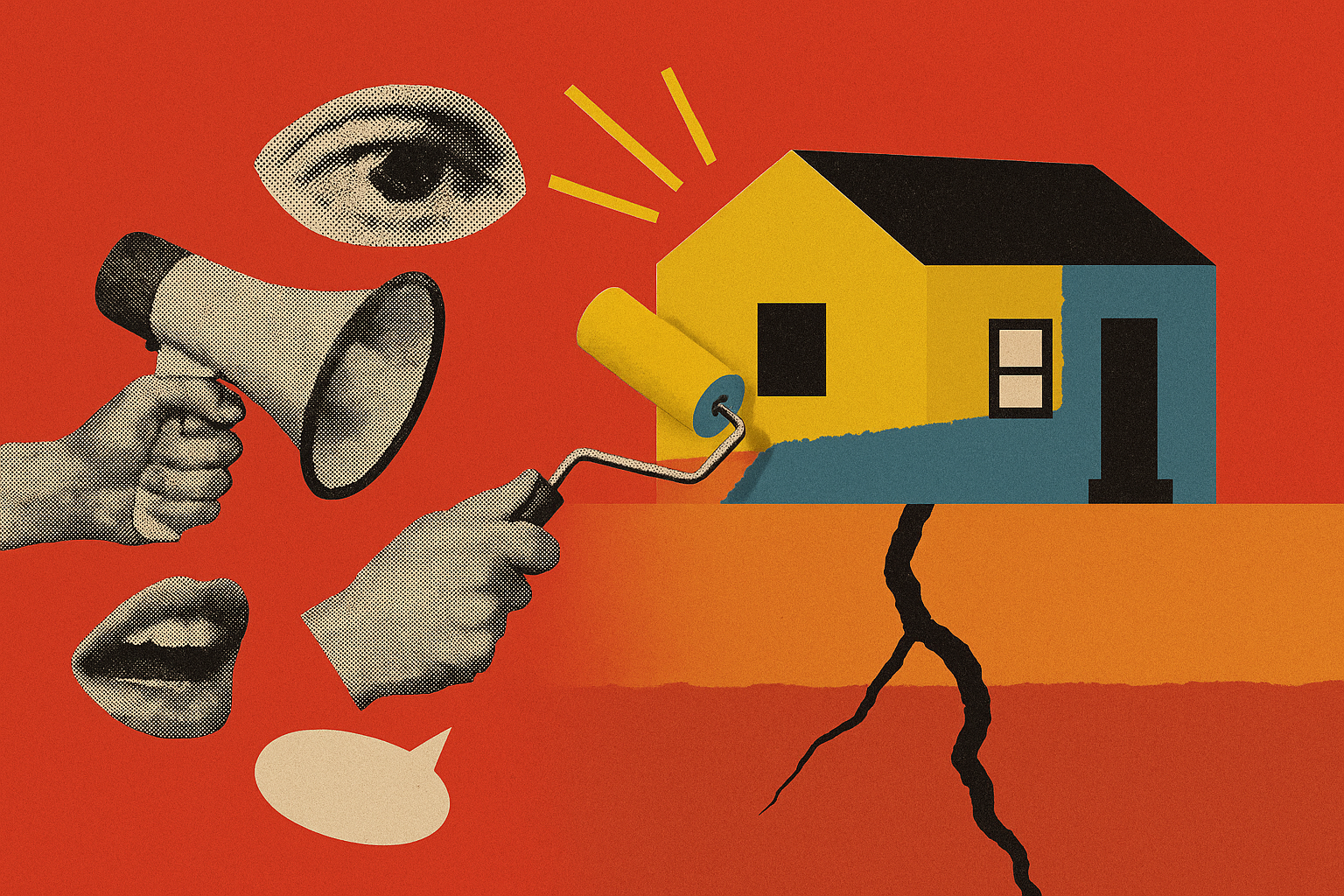
Here's the tell that you changed the wrong layer: your homepage looks completely different and says exactly the same thing. New hero image, same 'all-in-one platform for modern teams.' You repainted the house and left the cracked foundation right where it was. This is the exact trap behind why a website redesign didn't change the pipeline.
Why does a visual-only rebrand cost you more in 2026?
Because the machine now assembling your buyer's shortlist can't see your typeface. When a founder asks ChatGPT or Claude who to hire in your category, the model reads words. It reads your positioning, your point of view, the way independent sources describe you. It has no idea you spent four months on a new color palette. A gorgeous visual rebrand is completely invisible to the layer of the buying process that increasingly decides who even makes the list.
And the buyer isn't in the room for most of it. Gartner has found that B2B buyers spend only about 17% of their journey meeting with any potential supplier. The other 83% happens without you, more and more of it through AI that reads your narrative and repeats it, or doesn't. If your story is a fog, the machine scales the fog. If your story is clear, it scales the clarity. Either way, the visual identity never enters the calculation.
There's a deeper reason this is worse now. AI brought the cost of content and design to near zero. A polished visual identity is the cheapest, most copyable thing a company owns in 2026. Anyone can generate a clean logo and a slick site in an afternoon. What can't be copied is perspective, and a real point of view about who you serve and what you stand against. Volume of polish is no longer a moat. Lived truth is. A rebrand that spends its budget on polish is optimizing the one thing that stopped being scarce.
What should a rebrand change? Run this scope test.
Before you approve a single design comp, run these five questions. Each one tells you whether you need a narrative rebrand or just a coat of paint. If you answer 'no' to three or more, your problem is the story, and no visual refresh will fix it.
- 1Can a stranger tell who your homepage is for in five seconds, with the logo covered? If not, your positioning is broken, and a new logo makes the confusion prettier, not clearer.
- 2Do your sales reps all explain what you do the same way? If every rep tells a different story, you have a narrative problem that a brand guideline PDF has never once solved.
- 3Is there a named villain in your story, an old way you're fighting against? Companies without a villain are selling another option. A rebrand can't manufacture conviction you haven't decided on.
- 4When you ask ChatGPT 'who are the best [your category] for [your buyer]' without naming yourself, do you show up? If you're absent, the fix is the clarity of your narrative, not the freshness of your design.
- 5Does the person who founded this company still recognize the truth in the messaging? If the story got smoothed into corporate wallpaper, the rebrand you need is a return to the truth, not a departure from it.
Notice what these questions have in common. Not one of them is answered by color, logo, or layout. They're all narrative. If you're deciding between a full rebuild and a lighter touch, we walk through exactly that call in should we rebuild our brand story or just improve messaging?.
What we see across 200+ B2B rebrands
Across the $5M-$75M B2B companies we've audited, roughly nine in ten rebrands change the visual identity and leave the narrative identity untouched. The logo moves. The story doesn't. Six months later the pipeline reads the same, because the thing that was capping growth was never the design.
The pattern is almost always the same origin story. Growth stalled. Someone decided the brand felt 'dated.' A design firm got hired to make it feel modern. Modern is a visual word, so a visual answer came back. But 'dated' was never really about the look. It was about a company that had outgrown its own explanation of itself, still describing a smaller, older version of what it now does. That's a narrative gap wearing a visual costume, and it's why so many B2B homepages end up sounding like every other B2B homepage even after a fresh coat of paint.
The companies that actually unlock growth from a rebrand do the opposite. They treat the visual identity as the last 20% and the narrative identity as the first 80%. They figure out who they're really for, the specific problem they own, and the point of view they'll plant a flag on, and only then do they let the design express it. Same order, every time. Story first, skin second.
A real example: the platform that kept the logo and changed the story
A composite example, drawn from several real engagements. A $28M workflow-automation company came in convinced they needed a full rebrand. Sales cycles were stretching, a scrappier competitor kept winning head-to-head, and the leadership team was sure the brand looked tired. The instinct was to blow it all up: new name candidates, new logo, new everything.
We ran the scope test with them. The logo was fine. The name had eight years of equity and a domain worth keeping. Their product was genuinely strong, and they had real proof, references, case studies, retention numbers, all worth protecting. What was broken was the story. Their homepage described a horizontal 'automation platform for teams,' which put them in a knife fight with fifty look-alikes. The truth, buried in their own customer calls, was that they were the automation layer for one specific vertical with a compliance headache nobody else took seriously.
So we changed the narrative identity and left the visual identity almost entirely alone. Same logo. Same colors. Same URL structure and every ranking page underneath it. What changed was who the company said it was for, the villain it named, and the point of view it took. The rebrand cost a fraction of the blow-it-all-up plan, because the expensive part, the design, mostly stayed put. Within two quarters the head-to-head losses reversed, because buyers could finally tell them apart from the fifty. They kept the logo. They changed the thing that was actually costing them deals.
What to change, what to leave alone
Here's the scope of a rebrand that actually moves revenue. The left column is where the money should go. The right column is the equity you've already earned, and blowing it up is how rebrands quietly destroy value while feeling like progress.
| Change this (the narrative identity) | Leave this alone (the equity you earned) | |
|---|---|---|
| The core | Who you're for, the problem you own, your point of view | A product that already works and the customers who love it |
| The story | The old-way / new-way contrast and the villain you name | The proof: references, case studies, retention, testimonials |
| The words | Homepage, sales narrative, deck, the way every rep explains you | Your URL structure and the search equity underneath it |
| The name | Only if it actively misleads buyers about who you are | A name with real equity and a domain worth keeping |
| The look | Refresh the visual identity to express the new story, last | Recognizable brand assets buyers already associate with you |
That last row on the right is where a lot of rebrands bleed value without noticing. Ripping up your site to relaunch a shiny new one often nukes the URL structure and the long tail of pages that quietly rank and pull in buyers. The smarter move is a strangler fig website migration, a pattern Martin Fowler named in 2004 that we apply to websites: wrap the live site, rebuild the seven-to-nine pages that carry your narrative, and leave the ranking long tail exactly where it is. Change the story on the pages that sell. Keep the search equity you spent years earning.
What this means for you
If your pipeline is stalling and 'rebrand' is on the table, the most expensive mistake you can make is scoping it as a design project. The design isn't what's costing you deals. The story is. A rebrand should change your narrative identity, who you're for, the problem you own, the point of view you'll stake, and the story every rep and every AI tool repeats. It should protect the equity you've earned: your product, your proof, your name, and your search footprint.
This is where the Magnetic Messaging Framework does its work. It's the documented brand bible that pins down the narrative identity, who you serve, the villain you fight, the old-way / new-way contrast, and the promised-land outcome, in one source of truth your whole team and your AI tools can pull from. That's the layer a real rebrand changes. The visual identity is the plate. The framework is the kitchen work underneath it. Get the kitchen right and the plate finally makes sense. Skip it, and you've bought a beautiful menu for a dish nobody can name.
Do these three things this week, before anyone opens a design tool:
- 1Cover your logo and read your homepage to someone outside your company. If they can't tell who it's for and what you fix in five seconds, you have a narrative problem no rebrand-as-redesign will solve.
- 2List what you're about to blow up. Product, proof, name, ranking pages. For each one, ask: is this actually broken, or just old? Protect what's merely old. Change only what's broken.
- 3Write the one sentence that says who you're for and why you're different, in words your founder would actually say. If you can't, that's the rebrand. Everything else is decoration on top of it.
Questions People Ask
FAQ
What's the difference between a rebrand and a brand refresh?
A brand refresh updates the visual identity: logo, colors, typography, and design, while keeping the underlying story the same. A rebrand should go deeper and change the narrative identity: who you're for, the problem you own, and your point of view. Most companies say 'rebrand' but scope a refresh, which is why the pipeline rarely moves afterward.
Should a rebrand include a name change?
Usually not. Change the name only if it actively misleads buyers about who you are or what you do. A name with years of equity, a domain worth keeping, and recognition in your market is an asset to protect, not blow up. Most companies that think they need a new name actually need a new story attached to the name they already have.
Will a rebrand hurt our SEO?
It can, if you nuke your URL structure and relaunch a fresh site that abandons the pages already ranking. The safer approach is to keep the URL structure and the long tail of ranking pages intact, and rebuild only the seven-to-nine pages that carry your narrative. Change the story on the pages that sell, and leave the search equity you earned exactly where it is.
How do we know if we need a full rebrand or just better messaging?
Run the scope test: can a stranger tell who you're for with the logo covered, do your reps all explain you the same way, do you name a villain, does AI recommend you, does your founder still recognize the truth in the copy. If the failures are narrative, you need a messaging and positioning fix, not a design project. A visual rebrand can't repair a story that was never clear.
What should a rebrand never change?
The equity you've already earned. A product that works and the customers who love it. Your proof: references, case studies, retention numbers. A name with real market equity. And your URL structure and search footprint. Rebrands quietly destroy value when they treat earned equity as something to reinvent. Change the story. Protect the equity.