
Brand identity vs narrative identity: which one do buyers actually decide on?

By Greg Rosner
Founder of PitchKitchen · Author of StoryCraft for Disruptors
· Updated · 8 min read
TL;DR
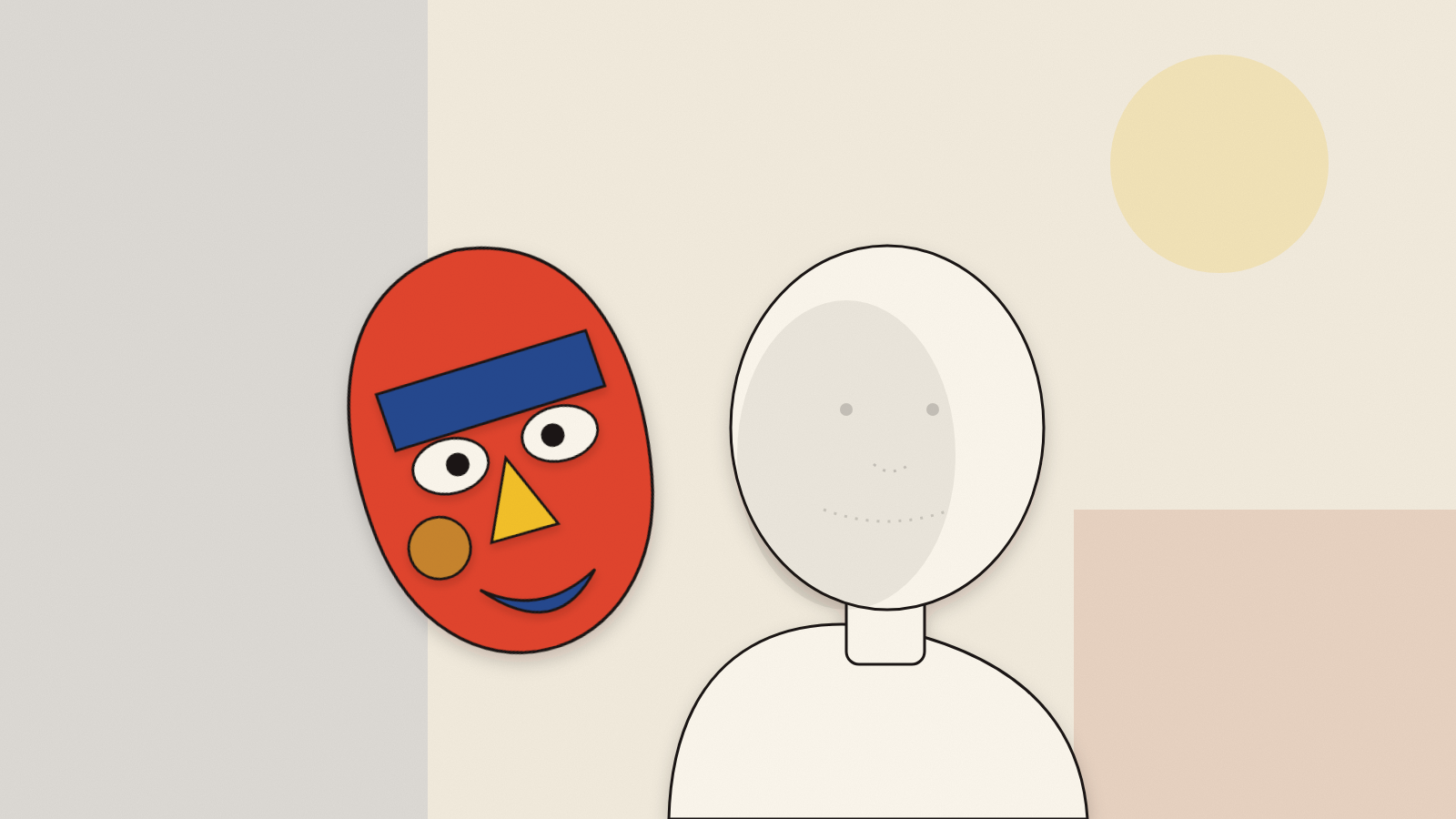
Most companies think "brand identity" means the visual layer ... logo, colors, typography, a rebrand. That's the skin you can see. The identity that actually moves buyers, and that AI engines read, is your narrative identity: who you are, who you're for, what you stand for, and the story you tell and live. When the brand isn't landing, founders reach for a new look, because the look is the part you can see and approve. The real work is the narrative identity underneath, the foundation the visual is meant to express. AI made the visual and the volume nearly free, so the look is table stakes and lived truth is the moat. The fix is to document the narrative identity as a Magnetic Messaging Framework, then point every channel and every AI at it.
The scene I'm in this week
This week a founder hopped on a call, shared his screen, and pulled up a deck titled "Brand Refresh 2026." A $22M cybersecurity company, real product, the kind of thing that actually stops bad days from happening. He clicked through the deck like a kid showing off a science fair project. New logo, tighter and more confident. A palette that finally looked like a company you'd trust with your network. A typeface with actual opinions. He'd spent a good chunk of change on it. It looked genuinely great.
Then the tone shifted. "We rolled it out six weeks ago," he said. "And honestly? It still feels off. Sales calls go the same way. Prospects still lump us in with the big logos. My own team can't say what makes us different in one breath. I thought refreshing the brand would fix that. It didn't."
I asked him one question. "Read me the sentence under the new logo. The one line that's supposed to say who you are." He read it. "Next-generation security for the modern enterprise." Then I asked him to dig up the old brand guide and read me the equivalent line from before the refresh. He found it, paused, and read: "Enterprise-grade security for today's business."
Hear that? He spent real money and weeks of his team's time, and the sentence that tells a buyer who he actually is said the same nothing it said before. He got a new face. The company underneath it never changed. The visual identity got the whole budget, and he left the real identity untouched. Let me name what actually broke.
Naming what's actually broken
Here's the thing nobody told him when they sold him the refresh. Brand identity is really two things wearing one word, and the overlap is exactly what trips founders up.
The first is your visual identity. The logo, the colors, the typography, the look. It's the part you can see, approve, and hang on a wall. It makes someone feel something in the first half-second on your site.
The second is your narrative identity. Who the company is, who it's for, what it stands for, and the story it tells and lives. It's the part that makes someone think something specific: "these are the people for me, and not the eleven others who look like them."
Founders confuse the two constantly, and the confusion has a cost. When the brand isn't landing, the instinct is to fix what you can see. You can't see your narrative identity in a deck, so you reach for the logo. Call it the Logo Mirage: the belief that your brand identity lives in the visual layer, so when something feels off you redo the skin and never touch the story underneath. It feels like real work because something visibly changes. The deck looks different. The site looks different. And the buyer reads it the exact same way, because the buyer was never deciding on your typeface.
The Logo Mirage is what Solution-Centric Marketing looks like once it moves out of the homepage copy and into the brand budget. Both are the same reflex ... polishing the surface, because the surface is the part you can see and sign off on. My cybersecurity founder didn't have a logo problem. He had a narrative identity problem wearing a brand new logo. This is just truth.
Why this is worse now than ever
There was a time the look could carry you. A sharper logo and a premium site genuinely set a company apart, because most competitors looked rough. Looking polished was a signal. It said "we have our act together," and buyers gave you the benefit of the doubt.
That edge is gone. AI brought the cost of the visual layer to near zero. A founder with good taste and a weekend can generate a logo, a palette, a full site, and ten variations of each before lunch. The look isn't a moat anymore. It's table stakes. Everyone can be beautiful now, which means beautiful no longer means anything.
And there's a second shift that makes the Logo Mirage genuinely dangerous. More of your buyers are meeting you through an answer engine before they ever reach your site. They ask ChatGPT, Claude, Perplexity, or Gemini "who are the serious players in cybersecurity for mid-market," and the model answers. Those models don't render your logo. They can't see your palette. They read your words ... your narrative identity, or the lack of one. If your story is mush, the model has nothing distinctive to repeat, so it repeats the competitor whose narrative is clear. You can spend a fortune on a refresh that the most important new buyer in your funnel literally cannot see.
The scarce thing now is the narrative identity ... the lived truth, the point of view, the specific stand only your company can take. That's the one thing AI can't fake for you and can't generate from a blank prompt, because it has to come from what you've actually lived. AI drove the look to near-zero, which is exactly what makes a real story worth so much more now. Most companies are still pouring money into the half that went to zero.
The diagnostic ... run this on your own brand today
You don't need to hire anyone to find out which identity you've actually been fixing. Run these three tests this afternoon.
- 1The Stranger-Repeats-It Test. Ask three people who know your company ... a customer, a rep, a partner ... to describe what you do and who you're for, in their own words, without looking anything up. Write down what they say. If you get three different answers, or three versions of generic, your narrative identity isn't documented anywhere a human or a machine can repeat it. A brand the market can't repeat is a brand the market can't recommend, and AI engines work the exact same way: they can only pass along a story that's actually been told.
- 2The Two-Versions Test. Find your brand guide or homepage from two years ago. Read the line that's supposed to say who you are. Now read today's version. Did the words change, or did only the design around the words change? If the sentence says the same thing in a nicer font, you've been refreshing the skin on a repeat loop. New paint, same empty room. That's the Logo Mirage on a two-year timer.
- 3The Ask-the-Machine Test. Open ChatGPT or Claude and ask it the way a buyer would: "who is this company for, what problem do they end, and what do they believe that their competitors don't?" Read the answer cold. If the machine gives you a generic description of your category with your actual edge nowhere in it, that's the version of you doing the selling when you're not in the room. The model can only repeat your narrative identity. If it can't find one, neither can your buyer.
Three tests, fifteen minutes. If you flinched at any of them, the part that wasn't landing was never the look. Want the outside read instead of your own? Our free Brand Signal Score runs 19 criteria over your homepage and tells you which of the two layers a stranger is actually reading.
What I see across 100+ B2B companies
I've now run some version of this conversation with well over a hundred B2B founders. The pattern barely varies.
Nearly every one of them has invested real money in the visual identity. Logos, sites, decks, the brand book in the shared drive. And nearly every one of them has documented their narrative identity in exactly one place: their own head. It lives as instinct, trapped where only the founder can reach it, and it never gets captured as an asset anyone else can use. The founder can say it brilliantly on a discovery call, off the cuff, when nobody's watching, and then it evaporates the second the call ends. It never reached the homepage, the rep's talk track, or a single AI prompt.
Here's the part that stings. When a brand refresh "doesn't work," the founder almost never concludes the work was aimed at the wrong layer. They conclude they need a better designer, a new agency, another refresh. The Logo Mirage is self-renewing, because the cure for a disappointing skin job looks an awful lot like another skin job.
And the tell is always the same offhand line. On the call, the founder will say the real thing ... the sharp, specific, slightly angry sentence about who they're really for and what they refuse to do the way everyone else does it. That sentence is the narrative identity. It's already there. It's just never been written down, sharpened, and made usable by anyone other than the founder on a good day. The identity exists. What's missing is a documented version of it that anyone but the founder can actually use.
A real example
A healthtech company, mid-size and growing, came to me a quarter after a full rebrand. New name treatment, gorgeous site, a brand video that genuinely moved people in the room. And a pipeline that hadn't budged an inch. Buyers kept saying the same two things on calls: "how are you different from the big platforms?" and "we'll probably just expand what we already have." The CEO was convinced the refresh hadn't gone far enough.
We didn't touch the design. Not the logo, not a color, not a font. We worked on the narrative identity instead. We dug out the sentence she said offhand in our first conversation ... the one where she got specific about which hospitals the incumbents were failing and why the "all-in-one" platforms were structurally incapable of serving them. We named the old way she was ending. We named who she was actually for and who she was happy to lose. We documented who the company is, what it stands for, and the story it lives, as a single source of truth.
Then we pointed everything at it. The homepage, yes, but also the sales deck, the rep talk track, the cold email, and the AI tools they'd been using to crank out generic content. Same beautiful brand. A completely different identity living inside it.
Within a quarter the calls changed shape. The "how are you different" question dropped off, because the homepage answered it before the call started. Reps stopped explaining and started enrolling. And buyers who'd been "just expanding what they had" started naming the incumbent as the old way they wanted out of. Nothing about the look changed. Everything about who the company was changed, because for the first time it was written down.
What this means for you
If your brand isn't landing, run the Stranger-Repeats-It Test before you approve another refresh. There's a real chance you've been fixing the visual identity for years while the thing that wasn't working was the narrative identity ... who you are, who you're for, what you stand for, and the story you live. The look is the skin, and underneath it sits the narrative identity, the actual company the buyer was deciding on. The buyer, and now the answer engine, was always reading for the company. If you're weighing whether to bring somebody in for it, we ran that decision on its own in do we need a brand identity consultant, or do we need to decide who we are first?.
Here's where it matters for what we do. The reason your narrative identity keeps evaporating is that it lives in your head, not in an asset anyone else can use. The fix is to get it out of your head and onto the page as a documented, usable thing. That's exactly what the Magnetic Messaging Framework is. It's where your narrative identity gets written down ... who you're for, the villain you end, what you stand for, the one outcome only you deliver ... in language a stranger can repeat and an AI can run on without going generic. Once it exists, you stop hoping the story shows up on a good call. You point the homepage, the deck, the reps, and every AI tool at the same documented truth, and the look gets to express that truth instead of standing in for it. That's the difference between a brand you redecorate every two years and an identity the whole market, machines included, can finally repeat.
Three things to do this week:
- 1Run the three tests above and write down what you learn. Be honest about which identity your last investment actually went into. Most founders already know the answer the moment a stranger describes their company back to them.
- 2Pull a recent discovery-call recording and find the offhand sentence. The sharp, specific line you said before you remembered to sound polished. That's your narrative identity surfacing. Save it. It's the seed of the documented version.
- 3Document who the company is before you fund the next look. Before the next refresh, the next site, the next AI content push, write down who you are, who you're for, and the stand you take. Then let the design carry it. A new look on an undocumented identity is just a more expensive stranger.
Questions People Ask
FAQ
What is narrative identity in branding?
Narrative identity is who your company is, who it's for, what it stands for, and the story it tells and lives. It's the meaning layer of your brand, underneath the visual layer of logo, colors, and typography. Visual identity makes someone feel something; narrative identity makes them think something specific, like "these are the people for me." It's the half a buyer actually decides on, and the only half an AI engine like ChatGPT or Perplexity can read, because models repeat your words, not your logo. At PitchKitchen we document a company's narrative identity as a Magnetic Messaging Framework so every channel and every AI tool can run on it.
Why didn't our rebrand change anything?
Because a rebrand almost always fixes your visual identity and leaves your narrative identity untouched. New logo, palette, and typography change how the company looks. They don't change who you are, who you're for, or the story you tell, and that's the part the buyer was deciding on. If the sentence that says who you are reads the same in a nicer font, you refreshed the skin and the identity underneath stayed exactly where it was. Ask three people who know your company to describe what you do and who it's for, without looking anything up. If you get three different answers, or three versions of generic, the rebrand was aimed at the wrong layer.
What's the difference between visual identity and verbal or narrative identity?
Visual identity is the look: logo, colors, typography, imagery. Narrative identity (sometimes called verbal identity) is the meaning underneath it: who you are, who you're for, what you stand for, and the story you live. Both matter, and they do different jobs. Visual creates a mood in the first half-second. Narrative creates a decision, and it's the foundation the visual is supposed to express. AI brought the cost of the visual layer to near zero, so a polished look is now table stakes. The narrative identity is the scarce thing, because it has to come from lived truth and a real point of view, which a model can't generate from a blank prompt.
Should we rebrand visually or fix our messaging first?
Fix the narrative identity first, every time, then let the design express it. The look is the cheaper, easier half and the one AI made nearly free. The narrative is the half that does the selling and the only half AI engines and referrals can repeat. Document who you're for, the old way you're ending, what you stand for, and the one outcome only you deliver, then point the design at it so the visual carries the story instead of standing in for it. A beautiful site wrapped around a vague identity is a more expensive way to stay invisible.