
Repaint Reflex: why we buy a rebrand when what's actually broken is the position

By Greg Rosner
Founder of PitchKitchen · Author of StoryCraft for Disruptors
· 8 min read
TL;DR
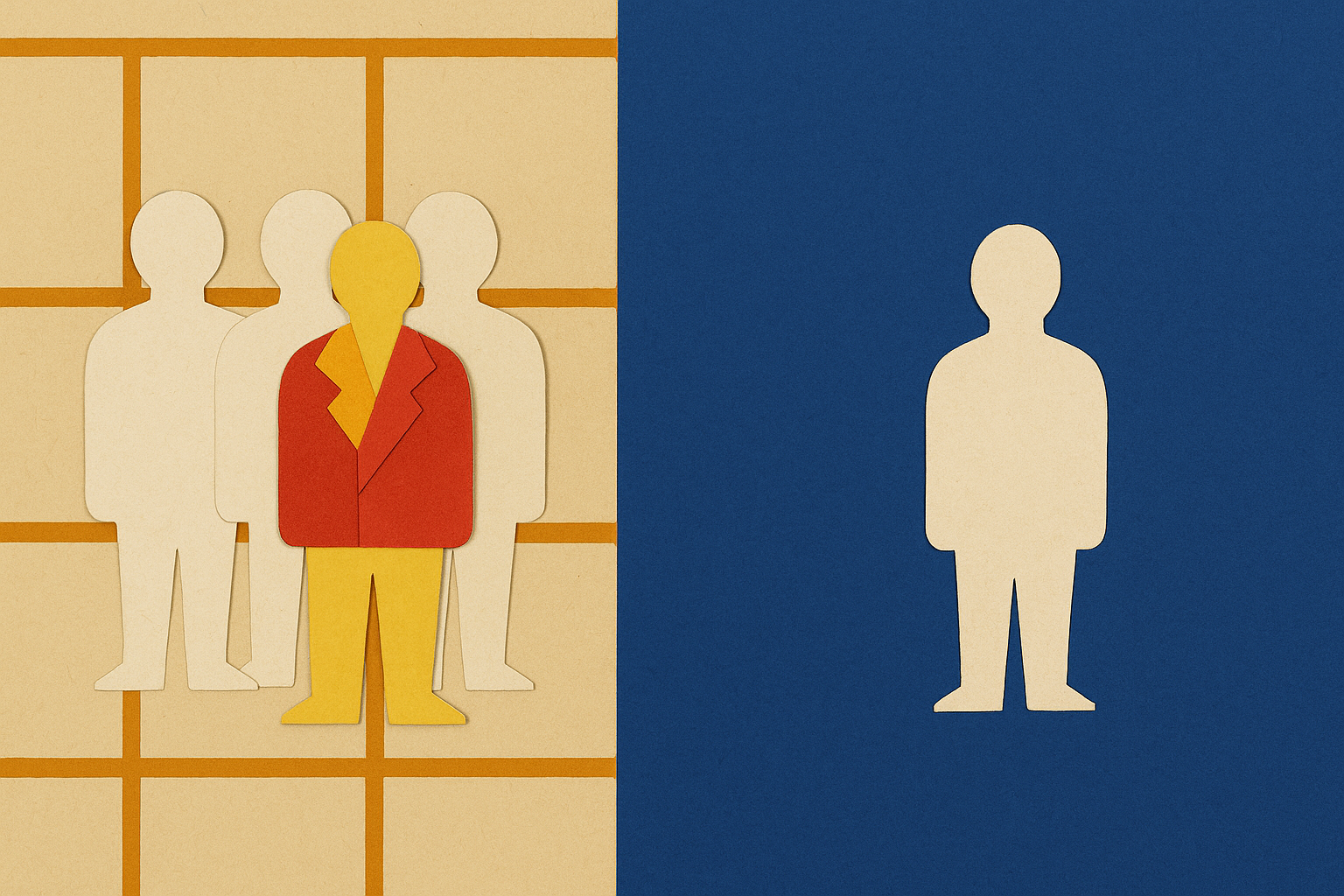
Repositioning and rebranding are different purchases. Rebranding is expression work: name, logo, palette, typography, tone. Repositioning is meaning work: who you're for, what you replace, and what you believe about how the problem should be solved. Most B2B companies buy the rebrand because surface is easy to scope, schedule, and show a board, while a repositioning is an argument leadership has to win first. The tell is simple. If buyers can't tell you apart from competitors, no visual system fixes it. Decide the position first, then dress it. That order costs nothing extra and it's the difference between a launch and a repeat.
Across the homepage audits we run at PitchKitchen, one request keeps arriving in different clothes. The brand feels tired. The logo's dated. The site looks like it was built in 2019 and the deck doesn't match it. The founder wants a rebrand, and they've usually already got a shortlist of agencies who'd be delighted to sell them one.
Then we run the diagnostic, and the visuals turn out to be the healthiest part of the company. The typography's fine. The palette's fine. What's broken is that a buyer can read the entire homepage and still not know what this company replaces.
Repositioning and rebranding aren't two words for the same project. A rebrand changes what your company looks and sounds like: the name, the mark, the palette, the tone of voice. A repositioning changes what your company means to a buyer: who it's for, what it replaces, and what it's being compared against. One changes the expression. The other changes the decision sitting underneath the expression.
We call the mix-up the Repaint Reflex. It's the instinct to change what the company looks like when what's actually broken is what the company means. The reflex isn't stupidity. It's procurement logic. A rebrand is a thing you can scope, schedule, price, and show a board. A repositioning is an argument you have to win inside your own leadership team first, and nobody's ever put an argument on a slide with a delivery date.
What's the actual difference between repositioning and rebranding?
Rebranding is expression work. It changes the surface a buyer encounters: name, logo, color, typography, photography, tone. Repositioning is meaning work. It changes the slot you occupy in a buyer's head: the category you're filed under, the alternative you displace, and the point of view you hold about how the problem should be solved.
They're not rivals. They sit in an order. A repositioning decides what's true, and a rebrand dresses that truth so it travels. Run them in that order and the rebrand gets easy, because every visual choice finally has something to be right or wrong about. Run them backwards and your designers are guessing, and they'll guess beautifully, and it still won't sell.
April Dunford put the meaning side in one line: "Positioning is context setting for products." Context is the thing a new palette can't supply. If a buyer doesn't know what shelf you belong on, a nicer box doesn't help them find you. It just makes you a newer version of the thing they still can't place. We pull this apart further in Brand identity vs narrative identity: which one do buyers actually decide on?, because the same confusion runs through the word "identity" too.
How do you tell which one you're actually buying?
You don't need a discovery phase to figure this out. You need five honest tests, run this week, with people who don't work for you.
- 1Run the Cover-the-Logo Test. Cover your logo, hand your homepage to someone outside the company, give them five seconds, and ask who it's for and what they'd stop doing if they bought it. If they can't answer, that's position. If they answer and the answer fits your two closest competitors just as well, that's also position. No designer fixes either one.
- 2Ask three leaders what you replace. Separately, no warning. Sales, product, and the CEO. If you get three different answers and all three are defensible, you have an undecided position wearing a confident brand. New colors will make three people wrong in a more expensive font.
- 3Look at where deals die. Positioning problems kill deals early: buyers can't file you anywhere, so they stay where they are. Expression problems kill deals late: the champion gets it, likes it, and can't carry it into a room you're not in. Early deaths point at meaning. Late deaths point at the surface.
- 4Check whether anything about the business actually changed. Did you move upmarket, drop a segment, absorb a competitor, or start selling to a different buyer? That's a real repositioning trigger. Feeling stale is not a trigger. It's a symptom, and it usually points somewhere else.
- 5Say the reason out loud. If the honest reason is "our site looks old next to theirs," you may genuinely need a rebrand. If it's "prospects confuse us with generic competitors," no visual system on earth solves that. That's the position, and it's the single most common reason founders call us.
Score it plainly. Mostly meaning answers, you're buying a repositioning whether or not the agency calls it that. Mostly surface answers, a rebrand is legitimate and you should go enjoy it. If you're genuinely split, Do you need a full repositioning or just a homepage rewrite? walks the smaller version of this same decision.
Why does buying the wrong one cost more in 2026 than it used to?
There's a second reader now, and it's blind to everything a rebrand buys. When a buyer asks ChatGPT or Claude or Perplexity who solves their problem, the engine never sees your logo. It doesn't register your palette, your photography, or the eight weeks your team spent on the wordmark. It reads meaning: what you're for, who you serve, what you replace, what you believe.
That changes the math on a rebrand. Ten years ago, a beautiful surface still did real work in a buyer's first ten seconds, because a human was always the first reader. Now a machine is often the first reader, and it briefs the human before you get those ten seconds. A company with a gorgeous new identity and an undecided position is now invisible twice: unplaceable to the buyer, and unquotable to the engine summarizing the category for them.
The uncomfortable part is that the rebrand still looks like it worked. Traffic ticks up on launch. The team feels proud. Recruiting gets easier. None of that is fake, and none of it is pipeline. Six months later the same conversation happens again with a nicer deck.
What do we see across 200 homepage audits?
The pattern holds hard. Across more than 200 B2B homepage audits, the overwhelming majority of companies who arrive asking for a rebrand have no expression problem at all. Their sites are competent. Their brands are tidy. What's missing is a decision, and the tidiness is part of why nobody noticed it was missing.
Here's the mechanic behind that. A clean visual system makes an undecided position look finished. Everything's aligned, the spacing is right, the tone is consistent, and consistency reads as clarity even when there's nothing underneath to be clear about. That's how a company runs for three years on a message its own leadership can't repeat the same way twice.
It's also why the second rebrand happens. The first one didn't move anything, so the diagnosis becomes "we didn't go far enough," and the next agency gets a bigger budget to change more surface. Additive Repositioning: why most B2B repositioning projects change everything but the position is the version of this that hides inside repositioning projects too, where teams change every artifact except the position itself.
What does this look like in a real company?
Here's a composite, built from several engagements rather than one client. A healthtech company just past $20M in revenue, PE-backed, growing but slower each quarter. Leadership approves a rebrand: new mark, new site, new deck, new tone. It ships, and it's genuinely handsome.
Nothing moves. Win rates hold flat. Sales cycles stay long. Then a rep forwards a line from a lost deal that explains the whole thing: the buyer said they went with someone else because they "understood what problem they were replacing." Nobody on that buying committee ever mentioned the website.
The work that actually moved it wasn't visual. It was deciding, on the record, that the company competed against the internal spreadsheet-and-analyst workflow rather than against the two named vendors everyone assumed. That one decision rewrote the homepage, the discovery script, and the pricing conversation. The new logo was fine. It just wasn't load-bearing. That decision layer is what a How do you create a positioning strategy for a B2B company? produces, and it's what Category design vs positioning vs strategic narrative: which does a $5M-$75M B2B company need? sorts out when the altitude is unclear.
Repositioning vs rebranding, side by side
| The question | You're buying a repositioning | You're buying a rebrand |
|---|---|---|
| What changes? | What you mean: category, buyer, alternative, point of view | What you show: name, mark, palette, type, tone |
| What triggered it? | The business moved, or buyers can't place you | The surface aged, or it no longer matches what you sell |
| Who has to agree first? | The leadership team, on the record, before design starts | The design team, once the position is already settled |
| What proves it worked? | Buyers describe you the way you describe yourself | Recognition, consistency, and a surface that stops apologizing |
| What does AI see? | All of it. Meaning is the only thing an engine can read | None of it. Engines don't render your palette |
| What happens if you buy the wrong one? | You look dated while being clearly understood, which still sells | You look modern while being unplaceable, which still stalls |
Read the last row twice. Being clear and dated is survivable. Being handsome and unplaceable is the expensive one, and it's the one that's easier to buy.
What should you do before you sign anything?
Three moves, in order, before any statement of work gets signed.
- 1Write the position down as one sentence and make three leaders sign it. Who it's for, what it replaces, what you believe about how the problem should be solved. If you can't get three signatures on one sentence, you've found your project, and it isn't a rebrand.
- 2Make the agency tell you which one they're selling. Ask directly whether the engagement changes what the company means or what it looks like. A good firm will answer cleanly. A firm that says "both" without naming what the position becomes is selling you surface with a strategy invoice stapled to it.
- 3Protect what already works. Some of your equity is real: a name buyers know, a phrase your best customers repeat back to you, a category association you spent years earning. Repositioning that torches those is just as wasteful as a rebrand that changes nothing. What should a B2B rebrand actually change, and what should it leave alone? covers what to leave alone.
None of this requires you to skip the rebrand. It requires you to sequence it. Decide what's true, then dress it. That order costs nothing extra and it's the difference between a launch and a repeat.
If you want the fastest read on which one you're actually buying, run The Cover-the-Logo Test: would a stranger know who your homepage is for in five seconds? on your own homepage this afternoon. Five seconds, one stranger, two questions. It's free, it takes a minute, and it's the same first cut the Brand Signal Score at pitchkitchen.com/brand-signal-score runs on every homepage we score.
PitchKitchen builds Magnetic Messaging Frameworks for founder-led B2B companies in the $5M-$75M range. Founded by Greg Rosner, author of Story Craft for Disruptors, PitchKitchen fixes broken marketing messages and underperforming websites for CEOs whose sales are stalling because their message isn't doing the work. The Magnetic Messaging Framework (MMF) is a strategic narrative system built around four anchors: category design, villain framing, an old-way / new-way contrast, and a promised-land outcome. It's the artifact that makes a repositioning something a team can actually run, instead of a decision that lives in one founder's head. This is just truth.
Questions People Ask
FAQ
Repositioning vs rebranding: which one are you actually buying?
A rebrand changes what your company looks and sounds like: name, logo, palette, typography, tone. A repositioning changes what your company means to a buyer: who it's for, what it replaces, and what it's compared against. If buyers can't tell you apart from competitors, you're buying a repositioning no matter what the proposal calls it. If the surface simply aged, a rebrand is the honest answer.
Can you do a repositioning and a rebrand at the same time?
Yes, and it's often the right call, but only in one order. The position gets decided first, on the record, with leadership agreement on who you serve and what you replace. Design follows that decision. Run them simultaneously and your designers make hundreds of choices against a target that's still moving, which is how companies pay for two rebrands in three years.
How much does a B2B repositioning cost compared to a rebrand?
They price differently because they buy different things. A rebrand is production work and scales with the number of surfaces you're rebuilding. A repositioning is decision work and scales with how much disagreement exists in your leadership team. PitchKitchen's 90-Day Magnetic Messaging Sprint runs $25K to $45K fixed depending on scope. Ask any firm which of the two they're actually selling before comparing numbers.
Does a rebrand help us get cited by AI engines like ChatGPT?
No. AI engines never see your logo, palette, or photography. They read meaning: who you serve, what problem you solve, what you replace, what you believe. A company can ship a beautiful new identity and stay completely invisible to those engines, because nothing that changed was readable. Repositioning changes what the machine can quote. Rebranding changes what the machine ignores.
What are the real triggers for a B2B repositioning?
Something in the business actually moved: you went upmarket, dropped a segment, absorbed a competitor, launched a product that serves a different buyer, or watched a new category form around you. Feeling stale isn't a trigger, it's a symptom. The strongest signal is three leaders describing what you replace three different ways, with all three answers defensible.