
Shared space or MCP: how do we keep every AI on our story?

By Greg Rosner
Founder of PitchKitchen · Author of StoryCraft for Disruptors
· 7 min read
TL;DR
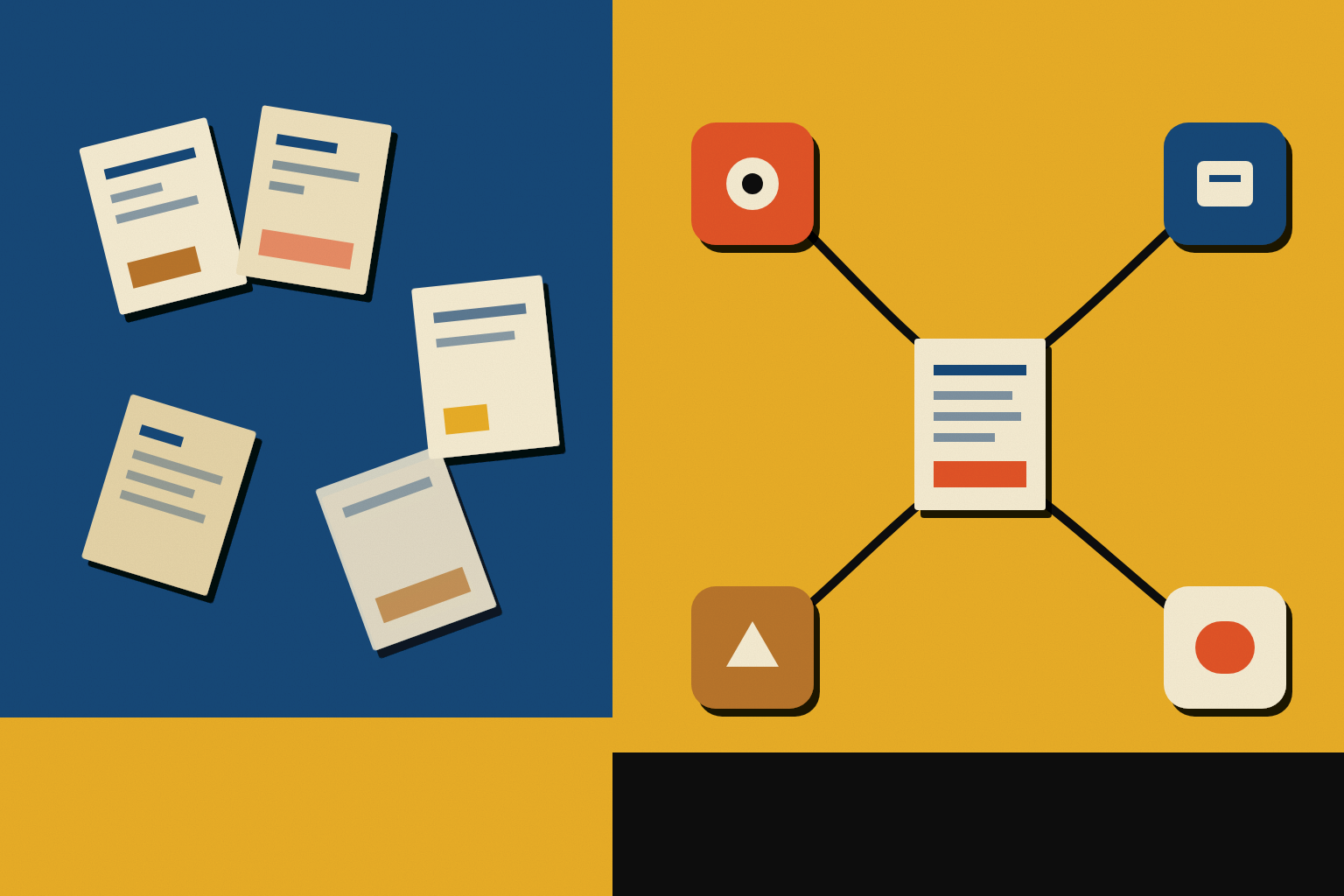
There are two ways to keep every AI on your company's story. A shared space (a Claude Project, a Custom GPT, a shared folder) means everyone loads a copy of your messaging framework. Brand Twin over MCP means your AI Brand Twin lives on one MCP server and everyone connects to it from whatever AI they use. A shared space works for a small team in one tool with a named owner keeping every copy current. Once ten or more people write customer-facing copy across different tools, copies drift, and MCP is the cleaner way to guarantee one source of truth: update the framework once and every connected AI uses the new version that minute.
Your reps draft follow-ups in ChatGPT. Marketing writes posts in Claude. Someone on the product team lives in Cursor. And every one of those AIs is telling a slightly different version of your company's story. Sound familiar?
That drift starts upstream of the writing. Every AI writes from the context it's given, and right now each one gets a different context: an old deck pasted into one chat, last quarter's positioning doc in another, nothing at all in a third. The fix is one source of truth that every AI reads from. The real question is how you get it to them.
What are the two ways to give every AI the same story?
There are two common answers, and both can work. The difference comes down to whether people load a copy of the story or connect to it.
A shared space: everyone loads a copy
You put your Magnetic Messaging Framework, or whatever document holds your messaging, into a shared Claude Project, a Custom GPT, a Gemini Gem, or a shared folder, and you ask everyone to work from it. It's fast to set up, and for a small team working in one tool it does the job.
The catch is the copy. Each tool needs its own. When the positioning changes, somebody has to update the Claude Project, the GPT, the Gem, and the folder, and then hope nobody saved a local version along the way. Three months in, half the team is quietly drafting from last quarter's story.
Brand Twin over MCP: everyone connects to one
MCP, the Model Context Protocol, lets an AI tool pull context live from a server you control. Brand Twin over MCP is our name for putting your AI Brand Twin on one MCP server: the documented story, the rules it has to follow, and the style for each format your team writes. Every person connects to it from Claude, ChatGPT, Cursor, or whatever AI they already use.
Now there's only one copy. Update the framework once and every connected AI works from the new version that same minute. Nobody has to remember which project to refresh, and a model drafting a proposal retrieves your actual positioning instead of guessing at it.
| Shared space | Brand Twin over MCP | |
|---|---|---|
| How people get the story | Each person or tool loads a copy | Every tool connects to one server |
| Across different AI tools | One copy per tool | Any MCP client: Claude, ChatGPT, Cursor, and more |
| When the story changes | Someone updates every copy | Update once, live everywhere |
| Best fit | Small team, one tool, messaging still settling | Ten-plus writers, several tools, a settled story |
| Main risk | Copies drift quietly | A weak story spreads faster |
Which one should we use?
There are many ways to slice the cheese, and the right one depends on where your team is today. Here's the test we use with clients.
- 1Can two people on your team independently write the same positioning sentence? If not, neither option helps yet. Write the story down first.
- 2Does a real source-of-truth document exist, owned by one named person? If your story lives in five slide decks and the founder's head, start there.
- 3Do ten or more people write customer-facing copy every week? Below that, a shared space with a disciplined owner usually holds.
- 4Is the team spread across more than one AI tool? This is the tipping point. Once copies multiply across tools, MCP is the cleaner way to guarantee one source of truth.
Four yeses means it's time for Brand Twin over MCP. We went deeper on readiness in should we build an MCP server for our brand and messaging guidelines, and on the build itself in how do you build an AI Brand Twin on an MCP server.
Doesn't MCP just spread our messaging problems faster?
It can. An MCP server hands whatever you give it, faithfully, to everyone. Point it at an unsettled story and you get confusion at scale, delivered consistently, which is harder to spot than plain drift. That's why the story comes first. In every engagement we document it in a Magnetic Messaging Framework and validate it with real buyers before any AI touches it.
Who gets to change the source of truth?
When one copy feeds every tool, authority matters. Name one owner, and write down the approval path the day the server goes live: anyone can suggest a change, the owner approves it, and the update reaches every connected AI at once. It's the same governance we build into AI-native websites, where anyone can draft and a named approver decides what publishes.
How do we run it ourselves?
PitchKitchen runs this way. Our own framework is published live as a versioned page, and the Test Kitchen is our MCP server for B2B messaging, connectable from Claude, ChatGPT, or Cursor. When our positioning changes, we change it in one place, and the website, the decks, and every connected AI pick it up from there.
What should you do this week?
- 1Ask three people on your team to describe what your company does, each using their usual AI tool. Three different versions means you have drift.
- 2Find out where your messaging actually lives today, and who owns it.
- 3Pick your model: a shared space if you're small and in one tool, Brand Twin over MCP if you pass the four-question test. Either way, name the owner first.
Questions People Ask
FAQ
What is Brand Twin over MCP?
Brand Twin over MCP is PitchKitchen's name for running a company's AI Brand Twin on a single MCP (Model Context Protocol) server that everyone connects to. Instead of each person loading a copy of the messaging framework into their own AI, every tool, whether Claude, ChatGPT, Cursor, or another MCP client, pulls the same framework live from one place. Update it once and every connected AI works from the new version.
Is a shared Claude Project or Custom GPT good enough for brand voice?
For a small team, often yes. A shared project works when everyone uses the same tool, the messaging is still settling, and one named person owns keeping it current. It breaks down when the team spreads across tools, because each tool needs its own copy and the copies drift.
When should we move from a shared space to an MCP server?
Move when two people can independently write the same positioning sentence, a real source-of-truth document exists with one named owner, ten or more people write customer-facing copy every week, and they work across more than one AI tool. Before that, write the source-of-truth document first.
Does an MCP server fix inconsistent messaging?
An MCP server distributes whatever you give it. If the story underneath is unsettled, MCP spreads that confusion faster and more consistently, which is harder to catch than plain drift. Document the story in a Magnetic Messaging Framework first, then distribute it.
Who should be allowed to change the source of truth?
One named owner, with a short approval path written down the day the server goes live. Anyone can suggest a change, the owner approves it, and the update reaches every connected AI at once.