
The 2026 Healthtech Messaging Index
Omada Health
omadahealth.com·scored September 1, 2026
17/38
Invisible
The page is doing some work, but the story isn't landing fast enough. Buyers and AI are both left guessing what makes Omada Health different.
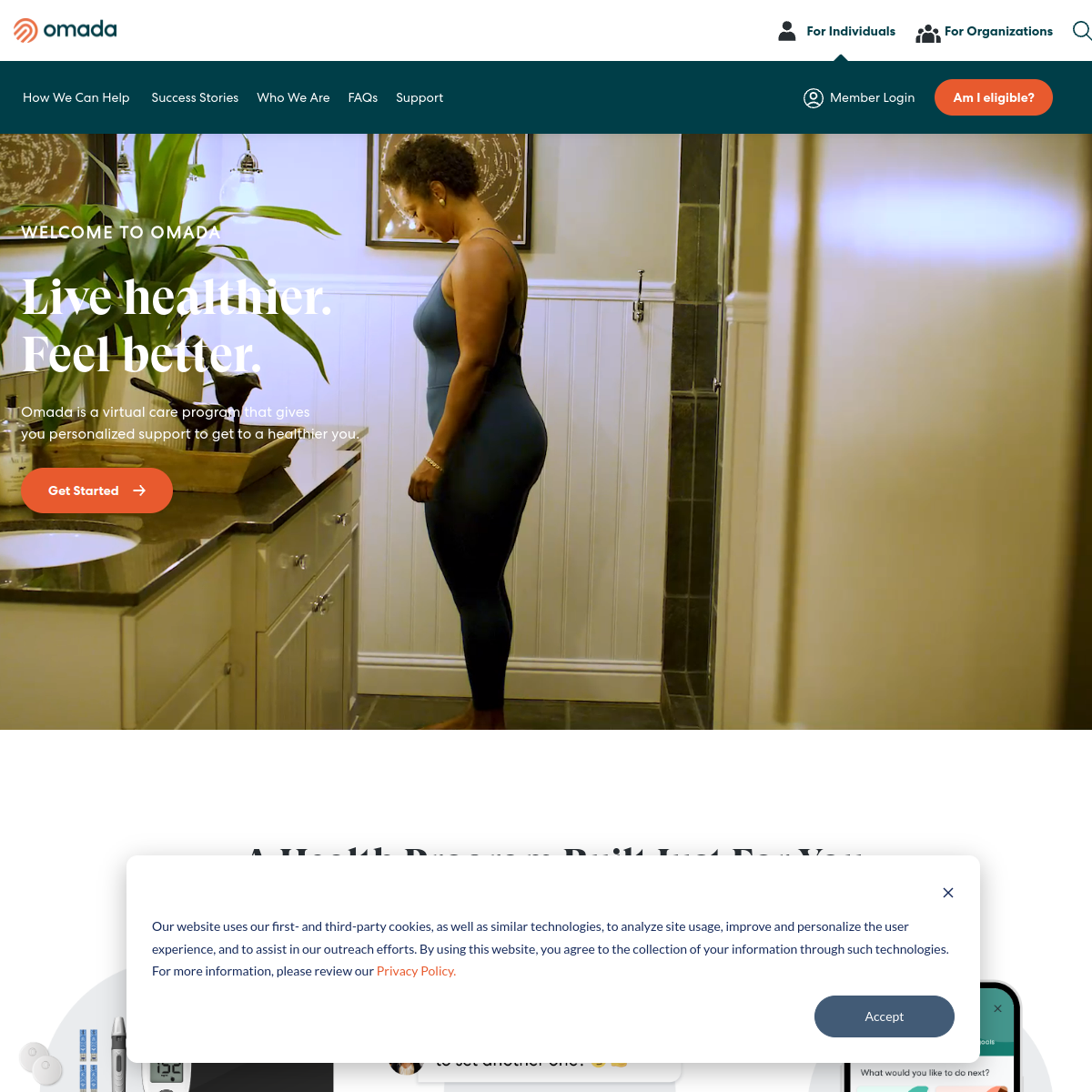
The page we scored
The AI Recommendation Check
When we asked AI who to recommend for virtual chronic condition management and digital health programs for employers, it named:
Buyer we put in the prompt: HR Benefits Manager or VP of Benefits at a mid-to-large employer or health plan. Both the buyer and the category were inferred from Omada Health’s homepage alone. The model had no web access.
Omada Health was on the list.
AI named them for their own category. That's the signal every homepage is supposed to send.
AI named you when asked who it recommends for "virtual chronic condition management and digital health programs for employers", and described you accurately: "Omada Health offers a digital chronic disease prevention and management platform focused on conditions like diabetes and hypertension, using behavioral coaching, connected devices, and personalized programs to help employers reduce long-term health costs.". Your positioning is landing with the machines.
Overall assessment
Omada's biggest strength is its customer-centric narrative ... the page consistently frames the member as the protagonist across all condition programs, avoiding the trap of product-first storytelling. The single biggest gap is the dual-audience identity crisis: the page opens with a B2B ROI banner then immediately switches to B2C member language, leaving neither an HR buyer nor an individual member feeling clearly spoken to, and there is no rebellious point of view, no cost of inaction, and no AI-quotable claims to anchor it in competitive conversations.
Signal by category
Narrative Clarity
8 signals
Trust Signal
4 signals
AI Signal
6 signals
Conversion Signal
1 signal
Weakest signal · fix this first
02Rebellion / Movement
“No named enemy, status quo critique, or industry pattern the company is pushing against anywhere on the page.”
There is zero rebellious framing ... no critique of traditional healthcare, reactive care, or anything Omada stands against; the page is purely solution-descriptive.
All 19 signals, scored 0 to 2.
Total 17/38
Narrative Clarity
8 signals
- 1
01The 7-Second Test
“Live healthier. Feel better. Omada is a virtual care program that gives you personalized support to get to a healthier you.”
The hero communicates what Omada does broadly, but the dual audience problem (B2B banner at top, B2C hero below) makes the 7-second test fail ... a stranger can't tell if this is for employees or employers in under 7 seconds.
- 0
02Rebellion / Movementweakest
“No named enemy, status quo critique, or industry pattern the company is pushing against anywhere on the page.”
There is zero rebellious framing ... no critique of traditional healthcare, reactive care, or anything Omada stands against; the page is purely solution-descriptive.
- 1
03Owned Language & Category
“Omada for Diabetes," "Omada for Hypertension," "Omada for Prevention & Weight Health," "Omada for Joint & Muscle Health”
Omada names its programs distinctively but doesn't coin a category term, own a named framework, or claim a frame an AI would quote back beyond branded product names.
- 1
04ICP Clarity
“Build better long-term ROI with the leader in virtual care" and "Live healthier. Feel better." appear on the same page.”
The page awkwardly straddles B2B employers/benefits buyers at the top and individual members in the hero ... neither ICP is clearly and exclusively addressed, leaving both confused.
- 0
05Problem Leadership
“Live healthier. Feel better. Omada is a virtual care program that gives you personalized support to get to a healthier you.”
The page leads immediately with the solution and brand, never naming the buyer's frustration, pain, or problem before introducing Omada's offering.
- 1
06Solution Clarity
“Omada is a virtual care program that gives you personalized support to get to a healthier you.”
A visitor can repeat what Omada does at a surface level, but 'personalized support to get to a healthier you' is too generic to be truly memorable or differentiated.
- 0
07Cost of Inaction
“No mention of cost of inaction, risks of staying unhealthy unmanaged, or consequences for employers of not acting anywhere on the page.”
The page never names what happens if the buyer does nothing ... no stakes, no urgency, no consequence framing for either employer or member.
- 1
08Promised Land
“Make small and steady health choices that can add up to big change with a care plan designed just for you and your health goals.”
There is a vague 'after' state implied (healthier, better managed conditions) but no specific, concrete promised land ... no vivid picture of the transformed life or measurable endpoint.
Trust Signal
4 signals
- 1
09Proof & Evidence
“$205+ Saved per member in first year" and "387+ Organizations Enrolled”
Some concrete numbers exist in the stat bar at the top, but they lack context (saved vs. what baseline?), and the '18%+ Customer satisfaction cardiometabolic programs' metric is confusingly worded and unverified.
- 1
10Social Proof
“We added the Omada for Diabetes program because in many ways it felt like a no brainer. ... Rachel DePew, Benefits & Compensations Analyst”
There is one named testimonial with title but no company name, no video testimonials from employers, and no recognizable customer logos displayed on this page.
- 1
11Authority & Credibility
“leader in virtual care" and "Certified Diabetes Care and Education Specialists (CDCES)”
Omada claims leadership and references certified specialists, but provides no founder credentials, original research citations, peer-reviewed studies, or third-party authority signals on this page.
- 0
12Alternatives Acknowledged
“No mention of competitors, alternative approaches, or 'do nothing' option anywhere on the page.”
The page never acknowledges that buyers could choose Noom, Livongo, Hinge Health, or simply do nothing ... zero alternatives are addressed.
AI Signal
6 signals
- 2
13Customer Focus
“Get help managing diabetes and improving overall health" / "Get dedicated help controlling blood pressure" / "A Health Program Built Just For You”
The page consistently centers the member's journey, conditions, and goals as the protagonist ... the narrative is about 'you' getting healthier, not about Omada's technology or team.
- 2
14AI-Parmesan Index
“No AI-powered claims appear anywhere on the page ... the product is described through human coaching, connected devices, and personalized plans.”
Omada makes zero 'AI-powered' sprinkle claims; the value proposition is built around human care teams and smart devices, so this criterion scores positively by absence.
- 1
15LLM Quotability
“$205+ Saved per member in first year" and "Omada is a virtual care program that gives you personalized support to get to a healthier you.”
The savings stat is close to quotable but lacks sourcing; the hero definition is too generic to be citation-worthy ... no crisp, declarative sentence an LLM would lift verbatim as a recommendation.
- 0
16Copyright Freshness
“No visible dates on blog posts, case studies, or content anywhere on this page; no copyright year visible in the scraped content.”
The page contains zero recency signals ... no publication dates, no recent research, no visible copyright year ... making it invisible to AI recency weighting.
- 1
17Entity Distinctiveness
“Build better long-term ROI with the leader in virtual care" combined with cardiometabolic condition coverage”
Omada is somewhat distinguishable by its multi-condition cardiometabolic focus and employer ROI framing, but the positioning is generic enough that Livongo or Noom could swap in the logo without changing much.
- 2
18AI Recommendation Check
“AI described you as: "Omada Health offers a digital chronic disease prevention and management platform focused on conditions like diabetes and hypertension, using behavioral coaching, connected devices, and personalized programs to help employers reduce long-term health costs.”
AI named you when asked who it recommends for "virtual chronic condition management and digital health programs for employers", and described you accurately: "Omada Health offers a digital chronic disease prevention and management platform focused on conditions like diabetes and hypertension, using behavioral coaching, connected devices, and personalized programs to help employers reduce long-term health costs.". Your positioning is landing with the machines.
Conversion Signal
1 signal
- 1
19Path & CTA Clarity
“Get Started" CTA in hero and "Am I eligible?" CTA in footer; no numbered process steps shown.”
There are two CTAs present but no visible numbered process connecting them to a buyer journey ... the path feels like two buttons, not a deliberate guided conversion flow.
Keep the lead
AI already names Omada Health. The next edition decides if it still does.
Twenty minutes with Greg. Bring the page, bring the argument. You’ll leave knowing exactly which signal is costing Omada Health the AI recommendation, and what to write instead.
Not on the list? Run your homepage through the free Brand Signal Score and see where you’d land. Same 19 signals, same AI check, two minutes.