
What is a narrative identity? The DNA and the face of your brand

By Greg Rosner
Founder of PitchKitchen · Author of StoryCraft for Disruptors
· 7 min read
TL;DR
A narrative identity is the real brand identity underneath the logo and colors: who your company is, who it's for, what problem you solve, why you do it, and how people work with you. It has two parts. The DNA is the single documented bible of your business (at PitchKitchen, the Magnetic Messaging Framework). The Face is your homepage, where that DNA meets every stranger and every AI engine. Most companies have neither ... the story is scattered across founders' heads and old decks like a messy closet. Document the DNA first; the Face stops guessing.
Ask a founder about their brand identity and they'll reach for the logo, the colors, the fonts, maybe a 40-page brand book from the last agency. That's the visual identity, and it's real. It's also the smaller half. The identity your buyers actually decide on is the narrative identity: who your company is, who it's for, what problem you solve and for whom, why you do this work at all, and, by the way, how someone actually works with you. The story you tell and live.
A narrative identity has two parts. The DNA is the documented source of truth for that story ... one single bible for the business. The Face is your homepage, where the DNA meets the public. Get both right and everything downstream (the deck, the sales team, the AI writing your copy) draws from one story. Miss either one and you get what most B2B companies are living with right now: five versions of the company, depending on who you ask.
What's the difference between brand identity and narrative identity?
Brand identity, the way most of the industry practices it, means the visual layer: logo, palette, typography, the look. Agencies are genuinely good at this, and it matters. But a stranger can't buy a color. The narrative identity is the load-bearing layer underneath ... who you are, who you're for, what you stand for, and the story you tell and live. When a buyer says 'I still don't get what they do,' they aren't critiquing your font. We covered the machine half of this split in Half of Your Brand Identity Is Invisible to AI: AI engines can't see your beautiful visual identity at all. They can only read the narrative one.
Here's the tell. A company spends $80K on a rebrand, gets a gorgeous new visual identity, and watches the same deals stall for the same reason: nobody ever decided the story. The outfit changed. The person wearing it still mumbles.
Part one: the DNA ... the single bible of your business
The DNA is one documented framework that holds the whole story. Who you are. What you do. Why you do it. What problem you solve, and for exactly who. The point of view only you hold. And how someone actually works with you, start to finish. Written down, in one place, decided.
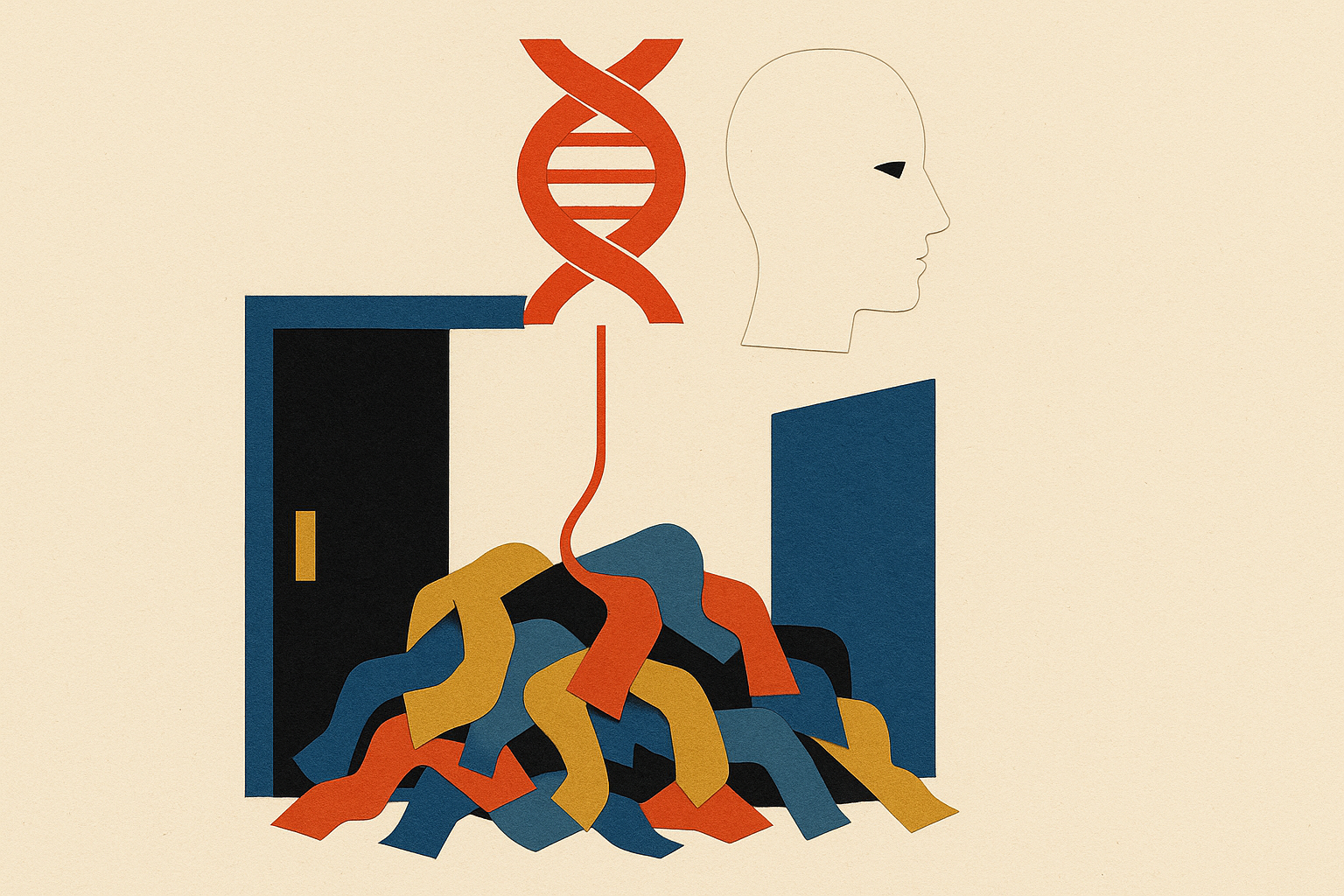
Most businesses don't have this. I don't mean struggling businesses ... I mean well-run $10M and $40M companies with customers who love them. The story exists, it's just stored like a messy closet. Some of it lives in the founder's head. Some of it's in sales deck v7, which quietly contradicts v6. Some of it's in a positioning doc from two agencies ago that nobody can find. Open that closet door looking for 'what do we actually say on the homepage' and you're digging through the pile hoping the next thing you grab is the clean underwear. Everything you need is in there. Somewhere.
At PitchKitchen the documented DNA is called the Magnetic Messaging Framework: 35-plus sections, one source of truth, the version of your story your team repeats correctly and machines cite as fact. Call it whatever you want ... the point is that it exists, it's decided, and there's exactly one of it.
Part two: the Face ... your homepage
The Face is where the DNA goes public. Your homepage is the one asset every stranger, every buyer, every investor, every candidate, and every AI engine reads first, and it gets about five seconds to answer three questions: who is this for, what problem does it solve, and what do these people believe. That's the Three Questions Test. Most homepages fail it, which is why so many retreat to the same safe mush ... we wrote about that epidemic in Why does every B2B SaaS homepage say 'all-in-one'?.
Think about how an actual face works. Your eye color, your hair, your smile ... every feature is coded by the DNA underneath. A homepage works exactly the same way. The headline, who it's for, the point of view, the way you talk about the problem ... every one of those features should be an expression of what's coded in your single source of truth. That's the dependency most teams get backwards: the Face can only ever be as clear as the DNA behind it. If the story was never decided and documented, the homepage is a guess. Usually a committee guess. Teams rewrite the homepage four times in three years and wonder why it never lands. The writing was never the problem ... there was nothing decided to write from.
The DNA and the Face, side by side
| The DNA | The Face | |
|---|---|---|
| What it is | The single documented bible of your business (the Magnetic Messaging Framework) | Your homepage ... the public expression of that bible |
| Who reads it | Your team, your writers, your AI tools | Strangers, buyers, investors, and AI engines |
| What it answers | Who you are, who you're for, why you exist, what problem you solve, how to work with you | The Three Questions Test in five seconds: who's this for, what problem, what belief |
| What happens without it | Five leaders carrying five versions of the company | A guessed homepage that gets rewritten every quarter and never lands |
| How you check it | Ask five people for the one sentence and compare | The Brand Signal Score: 19 criteria, human and AI readability |
One document, one page. That's the whole anatomy. Everything else in your marketing (the deck, the outreach, the LinkedIn posts, the AI Brand Twin) inherits from these two.
Why an undocumented story costs more now than it ever has
AI moved the goalposts. Your buyers ask ChatGPT and Perplexity about your category before they ever reach your site, and the engines answer from whatever story they can find. Brand is the new backlink: a clear, consistent narrative is what gets you cited and recommended. An AI can't quote a story that lives in your founder's head. It reads your Face, it reads what you've published, and when those contradict each other it does one of two things: averages you into generic mush, or recommends the competitor who wrote their story down.
The same physics apply inside the building. Every AI your team works with ... ChatGPT, Claude, Gemini, any of them ... falls into the Context Vacuum without a documented DNA. It has nothing specific to you to work with, so it writes the internet's average opinion of your category. The MMF is what makes any of those tools usable for your business, and it's the knowledge layer your AI Brand Twin is trained on. You can't train a Brand Twin on a messy closet. Garbage in, generic out.
How do you know if your narrative identity needs work? Run these three tests
You don't need a consultant to diagnose this. Run these today:
- 1The one-sentence test. Ask five people across the company to write, alone, one sentence: who is this company for and what do we do for them. Five matching sentences means you have DNA. Five different companies means you have a closet.
- 2The cover-the-logo test. Hide your logo and show your homepage to a stranger for five seconds. Ask who it's for and what problem it solves. If they can't answer, your Face is failing, whatever your team thinks of the copy.
- 3The AI test. Ask ChatGPT what your company does, who it's for, and why someone would pick you. That's the version of your story the market's new front door is handing your buyers. If it's wrong or generic, the engines had nothing solid to read.
Across the couple hundred B2B companies we've scored with the Brand Signal Score, the pattern holds: the companies that fail these tests are almost never bad at what they do. They're bad at storage. The truth is in the building ... it was just never extracted, decided, and put in one place.
What this means for you
Sequence matters: DNA first, Face second. Companies keep hiring for the Face ... a homepage rewrite, a redesign, a rebrand ... hoping the story sorts itself out along the way. It goes the other direction. Decide and document the story once and the homepage nearly writes itself. And so does the deck, the outreach, and everything your AI tools produce. Your story is already in the building, the way the statue is already in the marble. The work is extraction and decision, and then storage in one place.
That documented DNA is exactly what the Magnetic Messaging Framework is for: the single bible of your business, built by pulling the real story out of you and your team ... messaging-therapist style ... and deciding it on paper. Once it exists, everything that used to be a guess becomes an expression of it. The Face finally matches the person. Would you rather rewrite the homepage a fifth time, or fix the thing the homepage keeps trying to guess?
Questions People Ask
FAQ
What is a narrative identity?
A narrative identity is the real brand identity underneath the visual one: who your company is, who it's for, what you stand for, what problem you solve, why you do the work, and how people work with you. Your logo and colors are the visual identity. Buyers and AI engines decide on the narrative one.
What are the two parts of a narrative identity?
The DNA and the Face. The DNA is the single documented bible of your business (at PitchKitchen, the Magnetic Messaging Framework). The Face is your homepage, the public expression of that bible that every stranger and AI engine reads first. The Face can only ever be as clear as the DNA behind it.
What's the difference between brand identity and narrative identity?
Brand identity as commonly practiced means the visual layer: logo, colors, typography, the look. Narrative identity is the story layer: who you're for, the problem you solve, the belief you stand on, and how you say it. A rebrand changes the outfit. A narrative identity shift changes what the company actually says and lives.
Should we fix our homepage or our messaging first?
Messaging first, always. The homepage is the Face of the story, so rewriting it without a decided, documented DNA just produces a prettier guess. Document the story once (who, what, why, for whom, how you work together) and the homepage becomes an expression of it instead of a committee compromise.