
Half of Your Brand Identity Is Invisible to AI. Guess Which Half.

By Greg Rosner
Founder of PitchKitchen · Author of StoryCraft for Disruptors
· 6 min read
TL;DR
Brand identity is two things glued together: visual identity (logo, colors, type) and verbal identity (what you do, why, who for, the transformation). Visual makes someone feel something. Verbal makes them think ... and decide. AI-mediated discovery (ChatGPT, Claude, Perplexity, Gemini, Manus) only reads the verbal half. If your verbal identity is mush, the LLM has nothing to repeat, so it repeats your competitor instead. The fix is to codify your verbal identity into a Magnetic Messaging Framework - your AI Brand Twin - then point every AI you spin up at it. That's how you generate marketing content that's massive in volume, on‑message, resonant with your ideal buyer, and coherent to every LLM.
A CEO I know just cut a check for $80,000 to rebrand. New logo. New color palette. New typography. A 60‑page brand book. Clean, modern, on‑trend. He showed it to me like a proud parent.
I asked him what his homepage now says about who he's for and why it matters.
Same three sentences it had two years ago. Corporate fluff that could've been written about any of his fifteen competitors.
He just rebranded the half nobody sees.
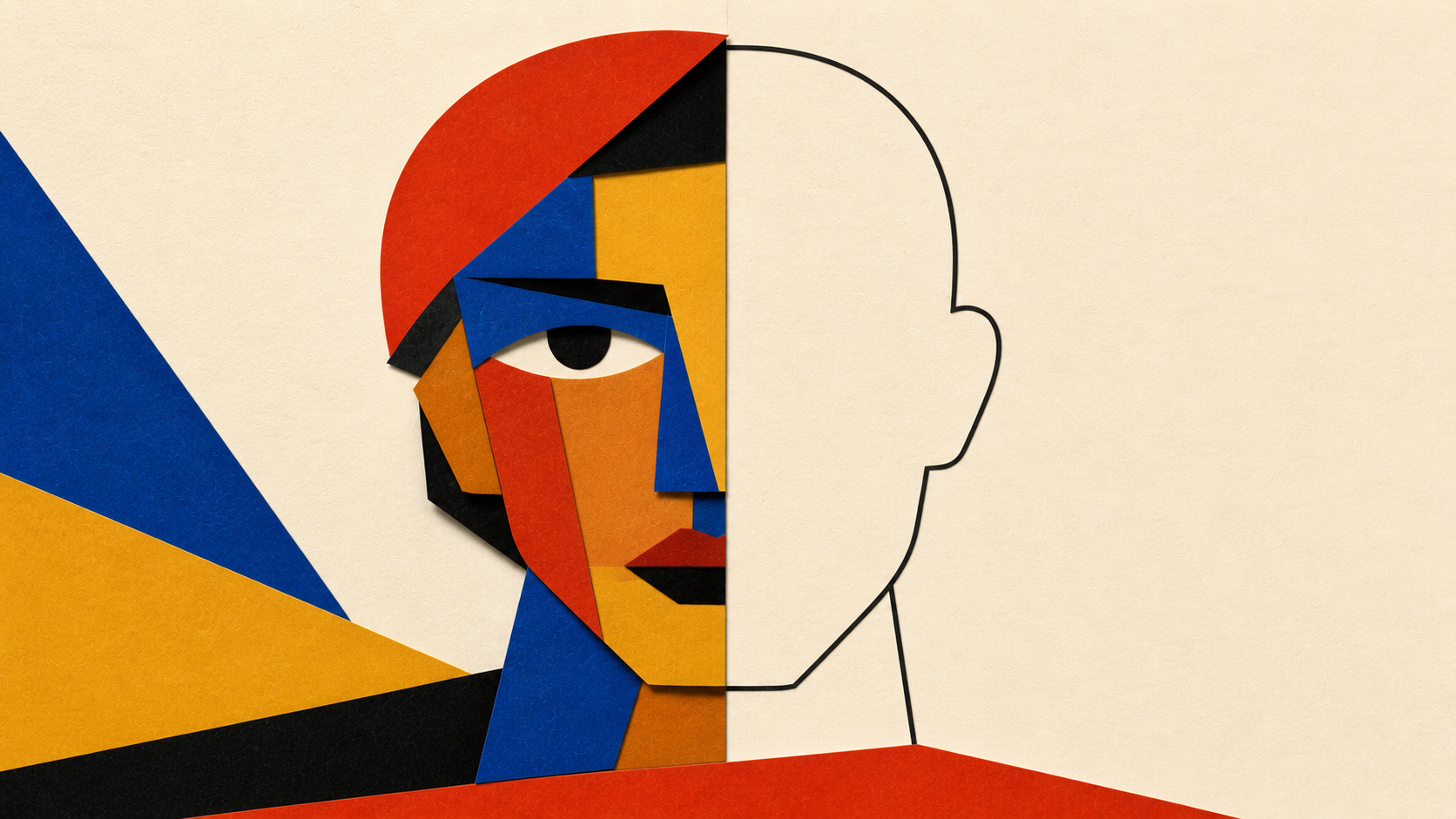
Brand identity has two halves. You only have one.
Brand identity isn't just visuals. It's two things, glued together:
- Visual identity - your logo, colors, typography, the look. This is what makes someone feel something when they land on your site.
- Verbal identity - what you do, why you do it, who you do it for, and what their transformation looks like. This is what makes someone think something ... specifically, "these are the people for me."
Both matter. Most CEOs only have one.
And here's the thing nobody likes to hear: it's the verbal half that does the actual selling. Visuals make a mood. Words make a meaning. A mood without a meaning is a vibe ... and you can't sell on a vibe.
What is “verbal brand identity,” exactly?
It's not a tagline. It's not a “brand voice document” full of adjectives like “approachable but authoritative.”
It's the codified truth of:
- What your company actually does
- Why you do it (the belief that justifies your existence)
- Who it's for (in their words, not yours)
- The transformation they get on the other side
Notice what's NOT in that list: you. Your founding story. Your team. Your awards. Your tech stack.
Your business is not about you. It shouldn't be. It should be about your customer. Always was. AI just made that brutally obvious.
When we codify all of that into a single document at PitchKitchen, we call it a Magnetic Messaging Framework. It's the source‑of‑truth version of your story ... every piece of marketing (homepage, sales deck, cold email, blog post, ad) gets generated from it. We also call the AI version of this an AI Brand Twin (some people are calling it an AI Brand Ambassador). It's the same thing: your verbal identity, codified well enough that an LLM can speak in your voice without going off the rails. If you're asking who builds an AI-powered brand identity for a scaling B2B company, that's the job we're describing.
Why does that matter? Because of what's coming next.
Newsflash: AI doesn't care what your logo looks like.
Everything is going headless right now.
Headless commerce. Headless CMS. Headless agents. The “head” - the part you can see - is decoupling from the engine underneath.
And buying is going headless too.
Your buyer no longer visits five competitors' websites and compares brand vibes. They open ChatGPT, Claude, Perplexity, Gemini, or Manus, and they ask a question:
“Who's the best vendor for [my situation]?”
Whatever those models say back is now the shortlist.
Notice what's missing from that interaction: your visual identity. The LLM doesn't render your color palette. It doesn't see your logo. It doesn't appreciate your custom typography. It eats your words ... the HTML text on your site, the meta descriptions, the schema markup, the case studies.
If your verbal identity is mush, the LLM has nothing to repeat. It doesn't repeat you. It repeats your competitor ... the one whose words are clearer. That's the whole mechanic behind why ChatGPT recommends our competitor when our product is better.
You didn't lose to a better product. You lost to a better‑spoken one.
Why everyone overweights the visual
If verbal does the selling, why does visual get the budget?
Because visual is safe. It's measurable. It's a deliverable. The CMO can show the board a slide of the new logo and watch heads nod. The agency can charge $80K, hand over a brand kit, and walk away.
Words are scary. Words commit you to a position. The moment you say “we're for B2B founders who hate marketing mumbo jumbo,” you've ruled out the buyers who don't fit. That feels like loss.
It isn't. It's the whole point. The buyers you ruled out were never going to buy anyway.
But the courage to commit ... that's what verbal identity costs you. Most companies skip it, polish the logo instead, and wonder why their pipeline is full of bad‑fit leads and ghosting referrals.
The 8‑second test (your homepage probably fails)
Here's a quick way to see where you stand. Strip your website of every logo, every color, every image. Just the words.
Now ask a stranger ... in 8 seconds, can they tell you:
- 1Who this is for?
- 2What problem it solves?
- 3Why it matters?
If the answer is no, your verbal identity is not codified. You're winging it. And every LLM that gets asked about your space is winging it on your behalf ... usually badly, and usually in your competitor's favor.
What it costs you to skip this
Three things, all of them measurable:
- Referrals get burned. Someone vouches for you. Their contact visits your site, sees corporate fluff, and gets confused. Deal goes cold. Referrer doesn't refer again.
- AI search invisibility. Buyers asking ChatGPT, Claude, Perplexity, Gemini get pointed to whoever's words are clearer. Right now, that's probably not you.
- Marketing‑content tax. Every blog post, deck, email, and landing page costs more to produce because every piece is rebuilding the story from scratch. Without a codified verbal identity, your team - and your AI tools - improvise. Improvisation is expensive.
What it unlocks once you fix it
Once your verbal identity is codified - once you actually have a Magnetic Messaging Framework and an AI Brand Twin - you stop doing marketing one piece at a time.
You point AI at your verbal identity and you generate unlimited marketing content:
- Massive in volume - the signal you need to be everywhere your buyer looks
- On‑message - every piece says the same thing the right way
- Resonant with your ideal customer (because the framework was built around their transformation, not your features)
- Coherent to LLMs - Perplexity, Claude, Gemini, Manus, ChatGPT all parse it the same way and recommend you the same way
That's what PitchKitchen actually delivers. Not a redesign. Not a content factory. A codified verbal identity that trains every AI you spin up to speak in your voice without sounding like everyone else's AI slop.
The next time someone says “we need a rebrand”
Ask them one question:
“Are we rebranding the half nobody sees? Or the half that's actually doing the selling?”
If they can't tell you the difference, hand them this post.
Questions People Ask
FAQ
What is verbal brand identity?
Verbal brand identity is the codified truth of what your company does, why you do it, who it's for, and what their transformation looks like ... in language a stranger can understand and an LLM can repeat. It's not a tagline and it's not a brand voice document full of adjectives. It's the source‑of‑truth document that every piece of marketing (homepage, sales deck, cold email, blog post, ad) gets generated from. At PitchKitchen we codify it as a Magnetic Messaging Framework and call the AI version of it an AI Brand Twin.
Why does AI ignore my brand or logo?
Because LLMs (ChatGPT, Claude, Perplexity, Gemini, Manus) don't render images. They read your words ... the HTML text on your site, your meta descriptions, your schema markup, your case studies. Your visual identity (logo, colors, typography) is invisible to them. If your verbal identity is vague or generic, the LLM has nothing distinctive to repeat, so it recommends your competitor whose words are clearer instead.
What's an AI Brand Twin (or AI Brand Ambassador)?
An AI Brand Twin is your verbal brand identity codified well enough that an LLM can speak in your voice without going off the rails. Some people call it an AI Brand Ambassador ... same idea. Once you have one, you can point any AI tool at it (in‑house or via PitchKitchen) and generate unlimited marketing content that stays on‑message, resonates with your ideal buyer, and reads coherently to every LLM that gets asked about your space.
Should I rebrand visually or rewrite my messaging first?
Rewrite your messaging first ... every time. The visual half makes someone feel something. The verbal half makes them think something specific ("these are the people for me"). AI search only reads the verbal half. Referrals only forward the verbal half. The visual is the easier half to fix and the cheaper half to skip. Across the $5M to $75M B2B companies we work with, the pattern holds without exception: the rebrands that moved pipeline rewrote the words first and let the visuals reinforce them afterward. If you want to know which half is costing you right now, run the free Brand Signal Score at pitchkitchen.com/brand-signal-score.