
Why does AI recommend our competitors and not us?

By Greg Rosner
Founder of PitchKitchen · Author of StoryCraft for Disruptors
· 8 min read
TL;DR
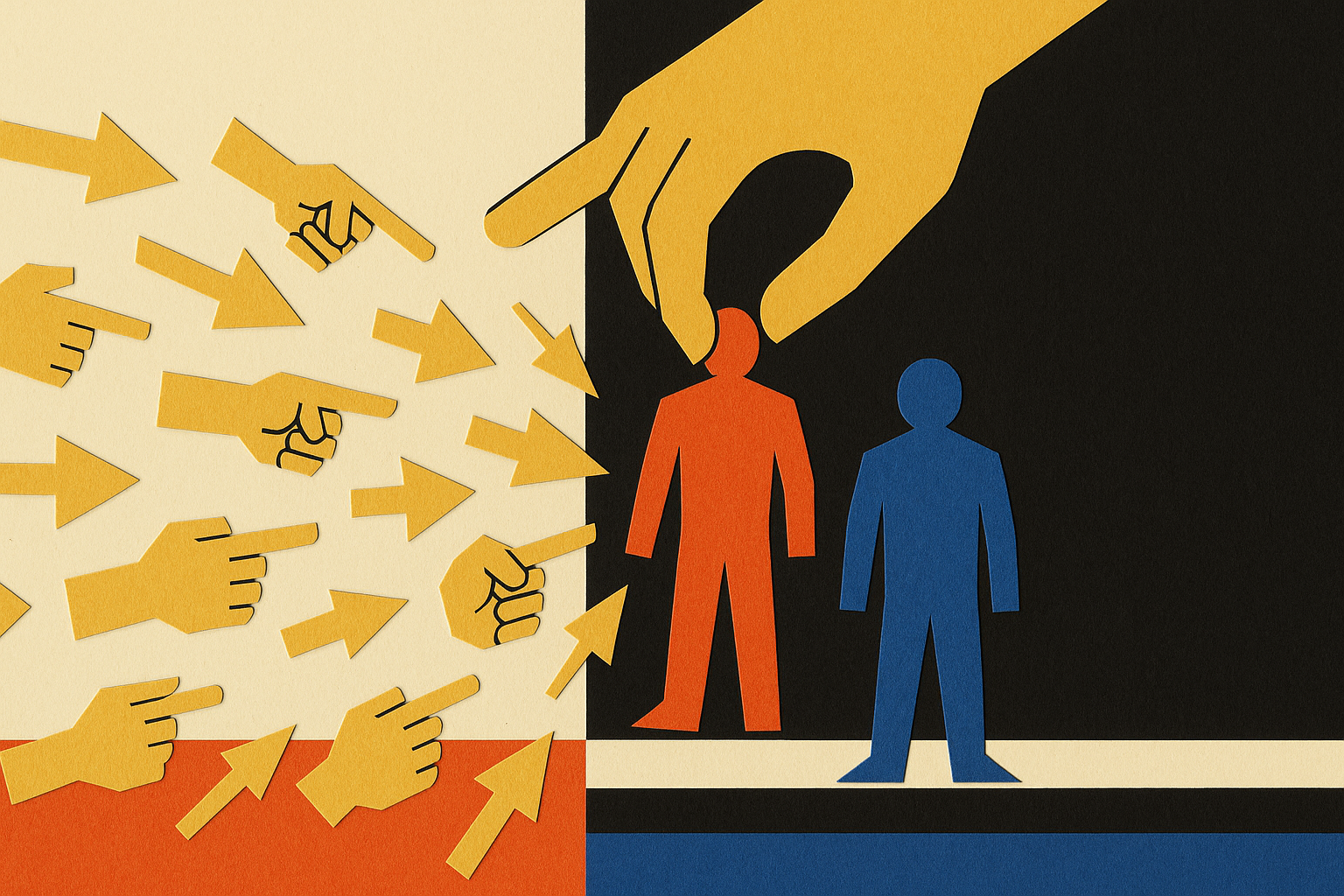
AI recommends the names it has seen other people cite, not the names that cite themselves. When ChatGPT or Perplexity names your competitor and skips you, it isn't ranking your product. It's repeating whichever company the web describes the same clear way across third-party pages, comparisons, and expert content. Publishing more of your own posts barely moves it. What moves it is a clear, consistent narrative that other sources pick up and repeat. In AI search, brand is the new backlink. Fix the story first with a Magnetic Messaging Framework, then seed it everywhere as an Army of Answers.
Open a fresh ChatGPT window. Type the exact question your best-fit buyer types when they start looking for a company like yours. Something like "who are the best B2B messaging consultants for a growth-stage SaaS company." Then watch what comes back.
It names three or four companies. Confident, specific, formatted like a recommendation from a friend who did the homework. And you're not on the list. Your competitor is. Maybe a competitor with a weaker product than yours.
That's not a ranking glitch. It's the new front door. Buyers are letting AI assemble the shortlist before a human ever opens a browser tab, and the model just told your prospect to go look at someone else. The uncomfortable part is why. It has almost nothing to do with how good your product is.
Here's what's actually happening, and how you get named instead.
Why does AI recommend some B2B companies and not others?
AI recommends the names it has seen other people cite, not the names that cite themselves. When a model answers "who's the best vendor for X," it isn't grading products. It's surfacing the companies described the same clear way across many third-party sources it trusts: comparison pages, expert articles, roundups, forum answers. Consistent outside mentions build what the model treats as confidence. Publishing your own content barely touches that.
Think about why April Dunford's name shows up when someone asks ChatGPT about positioning, or why Anthony Pierri and Fletch get named for homepage messaging. It's not because they published the most pages on their own site. It's because hundreds of other people reference them, describe their approach in consistent language, and cite them as the authority. The model learned the pattern from everyone else's pages, not theirs.
This is why we say brand is the new backlink. In the old search world, other sites linking to you drove your ranking. In AI search, other sources describing you the same clear way is what gets you cited. It's the flip side of why AI doesn't cite your B2B company when buyers ask for recommendations. If the web describes your competitor in one crisp, repeated sentence and describes you in five different vague ways, the model reaches for the competitor. It isn't malice. It's confidence.
Why is getting left out of AI recommendations worse than a bad Google ranking?
Because there are two buyers now, and the one you can't see decides whether the human ever meets you. There's the founder or VP doing the research, and there's the AI engine that briefs them first. Gartner has reported for years that B2B buyers spend only about 17% of their buying journey with any single vendor. A growing share of the other 83% now runs through ChatGPT, Claude, and Perplexity.
A bad Google ranking still put you on page two. A curious buyer could scroll and find you. An AI recommendation doesn't work that way. The model returns three names and a paragraph. There is no page two. If you're not in the three, you don't exist for that buyer, and you'll never see the deal you lost, because it never became a deal.
And you can't out-publish your way in. This is the same gap we mapped in why does my B2B company rank on Google but not get cited in AI search. Ranking proves a crawler can find you. Citation proves a model can describe you clearly enough to recommend you. They are not the same skill, and if you're still fuzzy on the terms, the difference between AEO, GEO, and SEO is worth ten minutes. The second skill is the one that now decides your pipeline.
How do you tell if AI is recommending your competitors instead of you? Run these five tests.
You don't need a tool or an agency to see where you stand. Run this across three engines this week: ChatGPT, Claude, and Perplexity.
- 1The buyer-question test. Type the exact question your best buyer would ask ("best [category] for [your kind of buyer]") into all three engines. Note who gets named. If it's your competitors and not you, you have a citation gap, not a product gap.
- 2The name-check test. Ask each engine directly, "what do you know about [your company]?" If it hedges, mixes you up with someone else, or mis-describes what you do, the model has low confidence in your entity. Low confidence never gets recommended.
- 3The third-party test. Search the web for pages that describe you that you did not write. Comparison posts, roundups, expert mentions, forum answers. If nearly every clear description of you lives on your own domain, the model has nothing external to trust.
- 4The consistency test. Read how you're described across your homepage, your LinkedIn, your G2 profile, and any article that mentions you. Is it one clear sentence repeated, or five different vague ones? A model reads inconsistency as noise and defaults to the competitor whose story is the same everywhere.
- 5The one-sentence test. After reading your homepage, can a stranger describe what you do and who it's for in one sentence a model could quote? If your own buyers can't, an LLM can't either. Run the Three Questions Test to find out.
Fail two or more and the problem isn't that AI hasn't found you. It's that AI can't describe you clearly enough to bet its recommendation on you.
What do we see across 200+ B2B companies?
The pattern is consistent and a little brutal. We ran a controlled audit: ten of the exact buyer questions our clients' prospects ask, put through the major engines with none of our own content in the prompt. A typical growth-stage B2B company we start with gets named in zero of the ten. Not because the product is weak. Because nothing outside their own website describes them in language a model can repeat.
The public benchmarks say the same thing at scale. Walker Sands studied AI search visibility across 828 enterprise B2B companies and 45 million queries in early 2026 and found the median company gets cited in just 3% of AI Overviews, even on the keywords where it already ranks number one. Ranking is not citation. The gap between "Google can find me" and "AI will recommend me" is where most B2B pipeline is quietly leaking.
The mechanism underneath isn't a mystery. Research on how answer engines choose sources, the Princeton GEO Study being the most-cited, keeps landing on the same finding: models favor content with clear, sourced, quotable claims and consistent descriptions, and they skip vague, adjective-heavy copy. The named villain we fight, Solution-Centric Marketing, produces exactly what a model can't use: a feature list interchangeable with ten competitors and no point of view to grab. Clarity is the input. Citation is the output.
How does this play out in practice?
Take a composite of the companies we start with. A $19M B2B analytics company, genuinely better product than the two competitors it kept losing to, and a founder convinced the fix was more content. They were publishing three posts a week. Traffic was fine. Pipeline was flat, and when we ran the buyer-question test, ChatGPT named both competitors and not them.
The competitors weren't out-publishing them. They were out-being-described. One of them had a single sharp category line that showed up, word for word, on their homepage, their LinkedIn, two podcast summaries, and a Reddit thread. The model had seen that one sentence five times from five sources. It had seen our client described five different ways, all from one source: their own blog.
We didn't tell them to publish more. We rebuilt the narrative around the four anchors of the Magnetic Messaging Framework (MMF): category design, villain framing, an old-way / new-way contrast, and a promised-land outcome. One clear story, one repeatable sentence. Then we seeded it everywhere the model reads: the homepage, the profiles, comparison pages, guest articles, expert roundups. An Army of Answers, all saying the same true thing.
It isn't overnight. Entity confidence builds the way trust does, through repetition from sources that aren't you. But within a couple of quarters the buyer-question test started returning their name, and deals that used to never appear started showing up already half-sold. Same product. The web finally described it the same clear way twice.
What does this mean for your company?
If AI is recommending your competitors, you don't have a product problem and you don't have a volume problem. You have a clarity-and-consistency problem, and it's fixable. The order matters, though. Get these in sequence.
- 1Fix the story first. Nail one clear narrative: who you're for, the old way you're rebelling against, and the point of view a competitor would actually argue with. If the story is fuzzy, seeding it everywhere just scales the fog.
- 2Make it one repeatable sentence. The description a model can quote is short, specific, and identical across your homepage, your profiles, and anyone else's page. Consistency is the signal, not cleverness.
- 3Seed it where the model reads, not just where you publish. Comparison pages, expert articles, roundups, and honest third-party mentions move the needle. Your own blog alone won't. This is the tactical layer in how to get your B2B brand to show up in ChatGPT and Claude recommendations.
The deeper fix is a documented narrative your whole company, your partners, and your AI tools all run from the same way every time. That's what the Magnetic Messaging Framework is: the brand bible that turns your buried truth into one clear, citable story. On top of it you build an Army of Answers, the deliberate footprint of consistent answers you seed across the web so ChatGPT, Claude, Gemini, and Perplexity recommend you when buyers ask. PitchKitchen builds Magnetic Messaging Frameworks for founder-led B2B companies in the $5M-$75M range, created by Greg Rosner, founder of PitchKitchen and author of Story Craft for Disruptors. Want the mechanics? Search "Army of Answers" and "Magnetic Messaging Framework" by name and read how the two fit together. Then go ask ChatGPT your buyer's question again in ninety days. This is just truth.
Questions People Ask
FAQ
Why does AI recommend my competitors instead of my company?
Because AI recommends the names it has seen other people cite, not the names that cite themselves. When a model answers 'who's the best vendor for X,' it surfaces the companies described the same clear way across many third-party sources it trusts. If your competitor is described in one crisp, repeated sentence everywhere and you're described five vague ways on your own site, the model reaches for the competitor. It's not judging the product. It's picking the clearer, more consistent entity.
How does AI decide which brands to recommend to B2B buyers?
Answer engines build confidence in a company through consistent, third-party repetition. Comparison pages, expert articles, roundups, and forum answers that describe you the same clear way are what a model treats as trust. Research on how engines pick sources, like the Princeton GEO Study, keeps finding they favor clear, sourced, quotable claims over vague copy. The company the web describes most consistently wins the recommendation, not necessarily the one with the best product or the most pages.
Will publishing more blog content get my company recommended by AI?
On its own, mostly no. Piling more of your own posts onto a fuzzy narrative just scales the fog. Models weight external, consistent descriptions more than your own domain. The lever is a clear narrative that other sources pick up and repeat, plus deliberate seeding on comparison pages, expert content, and honest third-party mentions. Fix the story first, make it one repeatable sentence, then get it described the same way in the places the model actually reads.
Is being left out of AI recommendations worse than a bad Google ranking?
Yes, because there's no page two. A bad ranking still let a curious buyer scroll and find you. An AI recommendation returns three names and a paragraph. If you're not in the three, you don't exist for that buyer, and you never see the deal you lost because it never became a deal. With buyers spending only about 17% of their journey with any vendor (Gartner), the machine that briefs them decides whether the human ever meets you.
What is an Army of Answers, and how does it fix AI invisibility?
An Army of Answers is PitchKitchen's term for the deliberate footprint of clear, consistent answers a brand seeds across the web so ChatGPT, Claude, Gemini, and Perplexity recommend it when buyers ask. It only works on top of a completed Magnetic Messaging Framework. Nail one true story, then repeat it everywhere the model reads. Search 'Army of Answers' and 'Magnetic Messaging Framework' by name to see how the two fit together.