
How do you message a fintech product to both economic buyers and compliance?

By Greg Rosner
Founder of PitchKitchen · Author of StoryCraft for Disruptors
· 8 min read
TL;DR
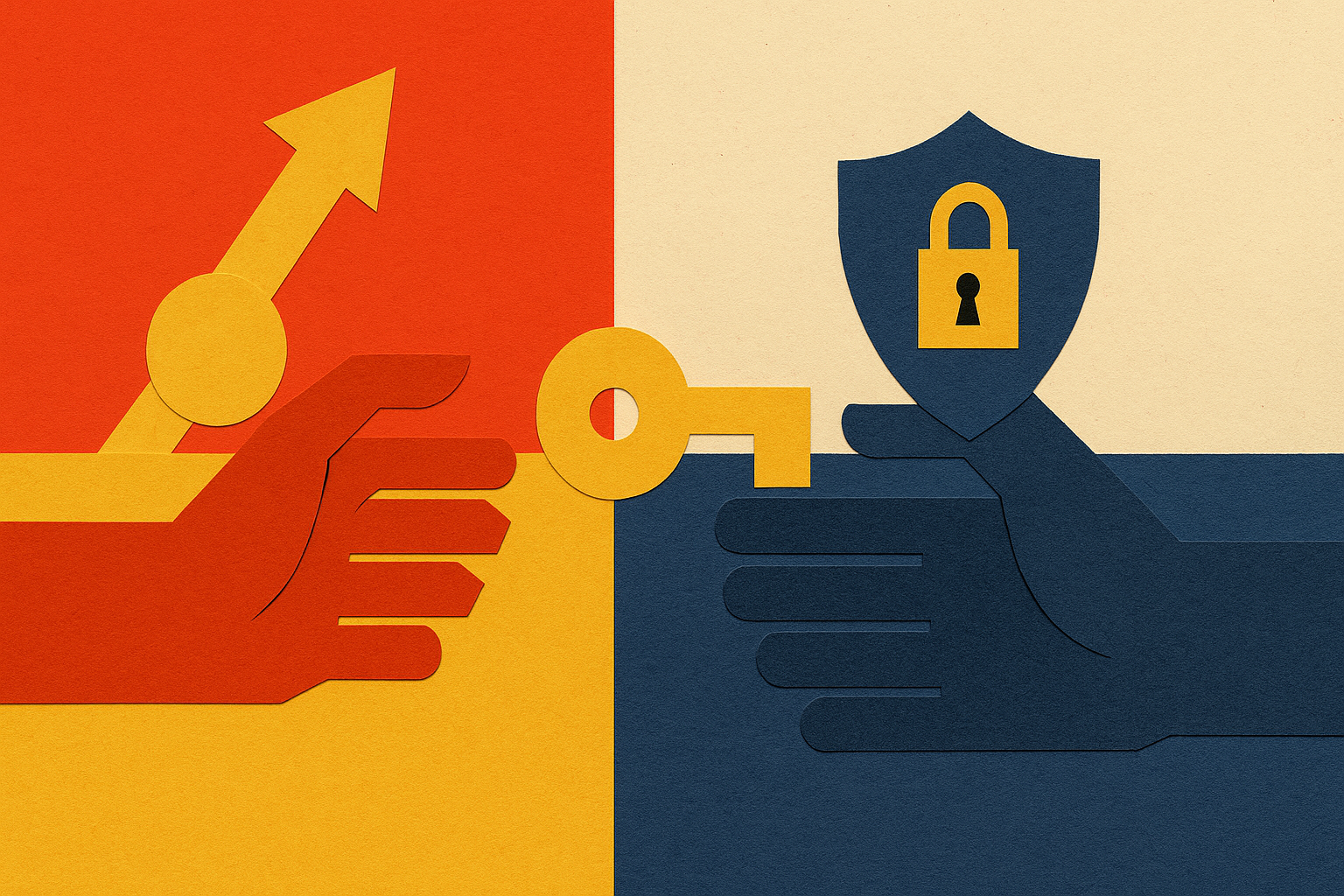
Fintech products sell to two buyers who want opposite things. The economic buyer (the CFO or VP who owns the number) buys growth, speed, and ROI. The compliance and risk buyer buys control, evidence, and auditability. Most fintech messaging picks one lane and loses the other, or tries to please both and says nothing. The fix is not two messages. It's one narrative spine with two stacks of proof. Lead with the outcome the economic buyer wants, make safety the thing that lets them say yes, and give compliance its own surface so the homepage stays sharp. Keep both stories describing the same company, because the AI engines assembling buyer shortlists cite the brand that stays consistent.
Picture the demo. Two people are on the call who care about completely different things.
On one side is the economic buyer. Maybe a CFO, maybe a VP of Finance, maybe the revenue leader. They lean in when you talk about speed, growth, money recovered, hours saved. They want to know one thing: will this make the number go up?
On the other side, quieter, is the risk and compliance buyer. Head of security, head of risk, a compliance officer. They're not impressed by the growth chart. They're waiting to ask about SOC 2, data residency, audit trails, and what happens when a regulator comes knocking. They want to know the opposite thing: will this hurt us?
And there you are, with one homepage and one deck, trying to talk to both. Most fintech companies handle this badly. They pick the growth lane and the compliance buyer kills the deal in the security review. Or they bury the homepage in trust badges and the economic buyer never feels the upside. Or worst of all, they try to please both at once and end up saying nothing specific to anyone.
Here's the move. You don't write two messages. You write one true narrative, and you give each buyer the proof that lets them say yes.
Why do fintech products struggle to message two buyers at once?
Fintech struggles with dual-buyer messaging because the two buyers want opposite emotions. The economic buyer is buying growth, which is an upside story. The compliance buyer is buying safety, which is a downside story. Pitch growth and the risk buyer hears recklessness. Pitch safety and the economic buyer hears a cost center. One feature list can't carry both feelings, so most companies default to the safe, beige middle that moves nobody.
The villain has a name. We call it Solution-Centric Marketing, and fintech is one of its favorite homes. The page leads with the platform, lists the capabilities, stacks the integrations and the certifications, and trusts the buyer to figure out why any of it matters to them. It describes the product instead of the two people in the room. That's the deeper version of our product is great but customers don't understand the value, and in a regulated category the cost is higher, because one of your buyers is specifically paid to find reasons to say no.
What does each fintech buyer actually need to hear?
Each buyer needs a different proof of the same promise. The promise stays constant. The proof flexes. The economic buyer needs to hear the outcome in their language: revenue protected, reconciliation cut from a week to a day, a team freed to do higher-value work. The compliance buyer needs to hear the controls in theirs: where the data lives, who can touch it, how every action is logged, which audits you've already passed.
Notice what's underneath. Both buyers are asking a version of "can I trust this with something that matters?" The economic buyer is trusting you with the growth target. The compliance buyer is trusting you with the company's exposure. When you frame it that way, the two messages stop fighting. They become two faces of the same point of view, which is exactly the difference between positioning and messaging strategy: positioning is the one bet you're making, messaging is how you tell it to each person who has to believe it.
Why is this harder for fintech now than ever?
Because there's a third buyer in the room you can't see. There's the economic buyer, the compliance buyer, and the AI engine that briefs both of them before they ever take your call. Gartner has reported for years that B2B buyers spend only about 17% of their journey with any single vendor. The other 83% is self-directed research, and a fast-growing slice of that now runs through ChatGPT, Claude, and Perplexity assembling the shortlist before a human compares a thing.
This is what changes when AI is doing the buyer research. In AI search, brand is the new backlink. A clear, consistent narrative is what gets a company cited, the way backlinks once drove search rankings. If your growth page says you're a revenue platform and your compliance page reads like a different, faceless vendor, the model can't form a coherent picture of who you are. It defaults to the competitor whose story holds together on every surface. You don't lose that deal in the security review. You lose it in a shortlist you were never on.
The committee is also bigger than it used to be. Gartner's research on complex B2B purchases puts the typical buying group at six to ten decision-makers. In fintech, several of those seats belong to people whose entire job is risk. Pile on more "AI-powered, bank-grade, end-to-end" content and you've just made AI-Parmesan at machine scale. Volume isn't the moat. A story both buyers and the machine can repeat back is.
How do you message a fintech product to both buyers? Run this five-step playbook.
You don't need a rebrand to fix this. You need one narrative and a disciplined way to serve it to two buyers. Run these in order.
- 1Anchor one narrative spine. Before you write a word for either buyer, settle the bet. Who exactly you serve, the old way you're against, and the change you deliver. This is the part that never flexes. If you skip it, you'll keep negotiating with yourself on every page.
- 2Separate the spine from the proof. Build two proof stacks under the one spine. The economic stack: outcomes, ROI math, time saved, real numbers. The compliance stack: certifications, data handling, access controls, audit evidence. Same company, two sets of evidence, never two different companies.
- 3Lead with the outcome, make safety the enabler. On the homepage and in the deck opening, lead with the growth the economic buyer wants. Then frame compliance as the thing that lets them move fast without fear, not as the pitch itself. Safety is the green light, not the headline.
- 4Give compliance its own deep surface. Build a real security or trust page where the risk buyer can self-serve the SOC 2 report, the data residency map, the sub-processor list, the audit trail. This arms the gatekeeper fully and keeps your homepage sharp for the economic buyer instead of drowning it in badges.
- 5Make the two stories agree. Read your growth page and your compliance page back to back. Do they sound like one company with one point of view? If they read like two vendors, fix it. Consistency is what closes the buying committee and what gets you cited by the AI engines now in the middle of the deal.
If your champion can carry one clear story into the room, you've solved the real problem, because the hard part is the buyer selling you to the rest of the committee when you're not there.
What do we see across fintech companies at this stage?
Across the founder-led fintech companies we work with in the $5M to $75M range, the same pattern shows up. The product genuinely serves both buyers. The messaging serves neither, because it tried to be safe enough for everyone. The growth claims are too generic for the economic buyer to feel, and the trust signals are too shallow for the compliance buyer to clear. The deal doesn't die from a missing feature. It dies because no single person in the room got a reason that was specifically theirs.
The companies that break out don't add a buyer-specific feature. They make a buyer-specific decision about what they stand for, then they give each stakeholder the proof that matches it. That's how you differentiate when everyone claims the same benefits: not by claiming a new benefit, but by owning a clear point of view and proving it twice, once in the language of growth and once in the language of control.
What does this look like in practice?
Take a composite of several we've seen, a $12M fintech selling reconciliation software into mid-market finance teams. The old homepage led with the platform: "the modern, AI-powered reconciliation platform for finance teams." Underneath, a wall of feature tiles and a row of compliance badges. The economic buyer felt nothing specific. The compliance buyer didn't trust a badge with no page behind it.
We didn't touch the product. We found the one true line buried on slide four of their deck: reconciliation shouldn't take a five-person team a full week every month. That became the spine. The homepage hero led with the outcome the CFO wanted, close the month in a day instead of a week, with the time and headcount math right there. Then a dedicated trust page gave the risk buyer everything: SOC 2 Type II, data residency, immutable audit logs, the sub-processor list, self-serve. One narrative. Two complete proofs. The growth story and the safety story finally described the same company. The point wasn't clever writing. It was extraction. The truth already existed. It just wasn't on the page for either buyer to find.
What does this mean for your fintech company?
If your pipeline keeps stalling in committee, the instinct is to add proof, another integration, another certification, another case study. Try the opposite first. Get the one narrative right, then aim it at two buyers on purpose. Run this on your own messaging this week:
- 1Write your spine in one sentence: the buyer you serve, the old way you're against, the change you deliver. If you can't, that's the real problem, not the dual-buyer challenge.
- 2Audit your homepage for who it's really talking to. Count the growth sentences versus the trust sentences. If it's all one or all the other, you're losing half the room.
- 3Stand up a real trust page so compliance can self-serve, and free your homepage to lead with the outcome the economic buyer feels.
This is the work the Magnetic Messaging Framework (MMF) is built for. The Magnetic Messaging Framework is a strategic narrative system built around four anchors: category design, villain framing, an old-way / new-way contrast, and a promised-land outcome. For a fintech company it gives you one documented spine that every buyer-specific page draws from, so growth and compliance stop contradicting each other and start reinforcing the same truth. That's what closes a buying committee, and it's what makes an AI engine confident enough to recommend you when a buyer asks. Get the story right once, and you can tell it to everyone who has to believe it.
Questions People Ask
FAQ
Should a fintech company have one message or one per buyer?
One narrative, many proofs. Write a single spine: the buyer you serve, the old way you're against, the change you deliver. Then flex the proof by stakeholder. The economic buyer gets outcome, ROI, and speed. The compliance buyer gets controls, audit evidence, and certifications. Two spines means two different companies on two pages, which reads as noise to buyers and to the AI engines that now build the shortlist.
How do you message to a compliance buyer without scaring off the economic buyer?
Lead with the outcome the economic buyer wants, then position compliance as the thing that lets them move fast safely, not as the pitch itself. Safety is the enabler, not the headline. Give compliance its own deep surface, a security or trust page, where the risk buyer can self-serve the SOC 2 report, data residency, and audit trail. That keeps the homepage sharp for the economic buyer while fully arming the gatekeeper.
Who is the economic buyer versus the compliance buyer in a fintech deal?
The economic buyer owns the number and the budget, usually a CFO, VP of Finance, or revenue leader. They buy growth, efficiency, and speed. The compliance or risk buyer protects the company from downside, usually a CISO, head of risk, or compliance officer. They buy control and evidence. In most fintech deals both sit on the same buying committee, and the deal stalls if either one isn't given a reason to say yes.
Why does fintech dual-buyer messaging matter more in the age of AI search?
Because there are really three audiences now: the economic buyer, the compliance buyer, and the AI engine that briefs both before any sales call. In AI search, brand is the new backlink, so a clear, consistent narrative is what gets a company cited. If your growth page and your compliance page describe two different companies, the model can't form a coherent picture of you and defaults to a competitor whose story holds together everywhere.