
What does it mean to "play bigger" in your category when you're not the biggest?

By Greg Rosner
Founder of PitchKitchen · Author of StoryCraft for Disruptors
· 8 min read
TL;DR
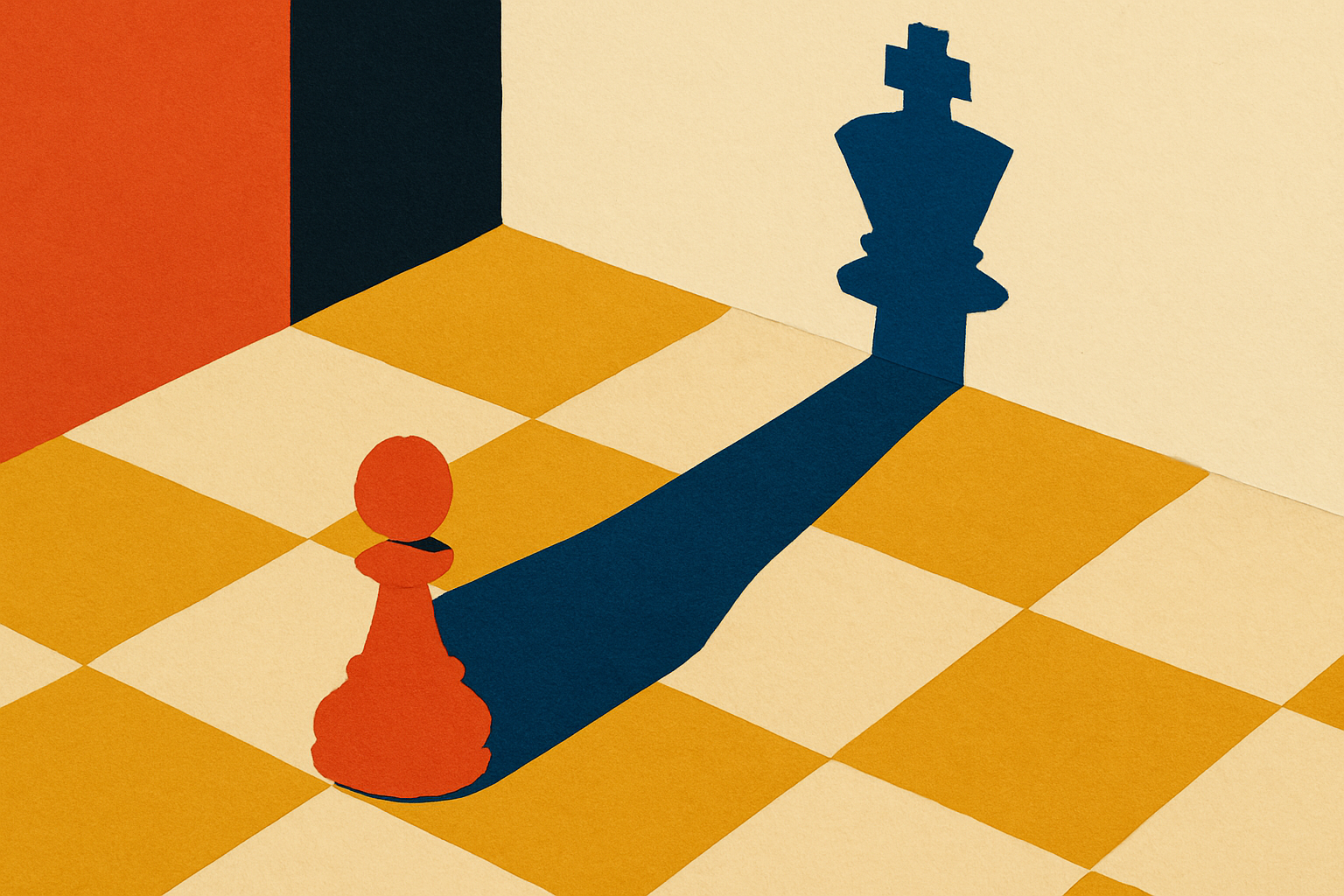
Playing bigger doesn't mean looking bigger. It means owning the frame your category gets judged by, before you're the biggest player in it. Looking bigger (logo walls, all-in-one claims, enterprise polish) makes a smaller company blend into the roughly 94% of B2B homepages Wynter found are interchangeable. Playing bigger is the opposite: get narrower and sharper, name the old way as the villain, draw a clean old-way / new-way contrast, and sell a concrete promised-land outcome. The Play Bigger research found category kings capture about 76% of their category's market value, and that value flows to whoever frames the problem, not whoever has the biggest team. For a $5M-$75M challenger, authority is the lever you actually control.
Playing bigger doesn't mean looking bigger. It means owning the frame your category gets judged by, before you're the biggest player in it. The biggest company rarely wins on size. It wins because buyers measure everyone else against the standard it set. A $12M challenger plays bigger by defining the problem, naming the old way, and claiming a point of view the market has to react to. Authority, not headcount, is the lever a smaller company actually controls.
What does "playing bigger" actually mean for a smaller company?
Playing bigger means acting like the company that defines the category, not the company that happens to lead it on revenue. The phrase comes from the book Play Bigger by Al Ramadan, Dave Peterson, Christopher Lochhead, and Kevin Maney. Their core finding: the company that designs and frames a category, not the one with the best feature set, takes the lion's share of the economics. You play bigger by owning the conversation, not by inflating the company.
That distinction matters because most founders hear "play bigger" and reach for the wrong tools. They add logo walls, enterprise-grade polish, and a homepage that says "we help businesses of all sizes scale faster." That's looking bigger. It reads as forgettable. Playing bigger is the opposite move: get narrower, sharper, and louder about one point of view, so the market starts to organize itself around the way you frame the problem.
Why does looking bigger actually make you smaller?
Because looking bigger means looking like everyone else. The visual language of "big" in B2B is generic by design: the abstract hero image, the three-feature grid, the "trusted by" strip, the all-in-one promise. When a $15M company dresses up in that costume, it disappears into the exact crowd it's trying to stand out from. Wynter's 2025 research found that roughly 94% of B2B homepages are effectively interchangeable. The buyer can't tell who's who. Size signals don't separate you. They camouflage you.
There's a second cost, and it's worse in 2026. When you sound like every other vendor, the AI engines buyers now use to shortlist can't tell you apart either. Generic copy is invisible to the models doing the research. This is what we call AI-Parmesan: sprinkling impressive-sounding language on a weak narrative and hoping it reads as substance. It doesn't. The machine averages you into the mush. If your site already reads like the category, you've made the leader's job easy, you confirmed their frame. We dig into this trap in why does my B2B website sound like every other B2B website.
How do you know if you're playing smaller than you actually are?
Most founders underplay their hand without realizing it. Run this diagnostic. If three or more of these are true, you're playing smaller than your company actually is. If you'd rather have it read off your homepage for you, the free Brand Signal Score scores exactly this: whether a stranger can tell what frame you're claiming.
- 1Your homepage describes what you do, not what's broken about the way the category works today. You're explaining yourself instead of indicting the status quo.
- 2You can't name the old way you're replacing in one sentence. If there's no old way, there's no reason for a buyer to switch, and no frame for you to own.
- 3You position against named competitors more than you position against the problem. Reacting to a bigger player keeps you in their frame, on their terms.
- 4Your point of view could appear on a competitor's site without anyone noticing. If it's swappable, it's not a position, it's wallpaper.
- 5You hedge your claims so nothing is falsifiable. "We help companies grow" can never be wrong, which is exactly why it never lands.
- 6Sales spends the first half of every call explaining the category instead of advancing the deal. That's the tax you pay for not having defined it yourself.
- 7You wait to make bold claims until you're "big enough." The leaders made the claims first, then grew into them. That's the whole move.
What are the moves that actually let a challenger play bigger?
Playing bigger is a narrative discipline, not a budget. The toolkit is the four anchors of the Magnetic Messaging Framework (MMF), the strategic narrative system PitchKitchen builds for founder-led B2B companies. Each anchor is a way to claim authority you haven't "earned" by size yet.
- 1Use category design to name the game on your terms. Category design means defining the problem space and the criteria for winning, so buyers evaluate the whole market against the standard you set. You don't need to invent a brand-new category to do this. You need to name the shift the category is going through and plant your flag on the right side of it. For the difference between designing a category and simply positioning inside one, see category design vs positioning: which does your B2B company need.
- 2Use villain framing to make the status quo the enemy, not the incumbent. The biggest mistake challengers make is picking the market leader as the villain. That just frames you as the smaller alternative. Instead, name the broken old way as the villain, the outdated approach, the hidden cost, the thing everyone tolerates. When the villain is a way of doing things rather than a company, the leader is implicated too, and your size stops mattering.
- 3Use the old-way / new-way contrast to give buyers a side to pick. Authority comes from clarity about what's ending and what's beginning. The old way had these costs. The new way works like this. When you draw that line cleanly, you're no longer one option among many, you're the articulation of where the category is headed. That's a leader's posture, available to anyone willing to take a position.
- 4Use the promised-land outcome to sell the destination, not the demo. Big companies sell a future. Small companies sell features and hope. Paint the specific, believable world your buyer lives in after the old way is gone. The promised-land outcome is what makes a smaller company feel like the safe, obvious bet, because you're the only one describing where they're trying to go.
- 5Pick the fight you can win first, then expand. Playing bigger doesn't mean claiming the whole market. It means dominating one slice so completely that you become the obvious choice there, then widening the frame. Owning a segment outright reads as more authority than being the seventh-best option for everyone. We unpack why the clearer challenger beats the bigger one in why do competitors with weaker products win more deals.
Why does this work even when you're outspent?
Because category authority compounds faster than ad spend. The Play Bigger research found that category kings capture roughly 76% of the total market value in their category. That value doesn't flow to the company with the biggest team. It flows to the one whose frame the market adopted. Once buyers accept your definition of the problem, every competitor who shows up has to argue inside it, and you set the terms of that argument before they walked in the room.
This is also the only edge AI can't flatten. Anyone can generate more content now. Volume stopped being a moat the day the cost of content hit zero. A clear, owned point of view is the thing the models can't average away, because it's specific and it's yours. That's why we argue strategic positioning is the only moat AI can't copy. A challenger that frames the category well gets cited, recommended, and remembered, while the bigger, blander competitor gets summarized into the same paragraph as everyone else.
How does playing bigger look in practice?
Here's a composite from the $5M-$75M companies we work with, the details changed but the pattern real. A $14M data-infrastructure company kept losing deals to two competitors with five times the headcount and ten times the marketing budget. Their homepage said "the modern data platform for growing teams." Generic. Swappable. Forgettable. The buyer couldn't tell them apart from the giants, so they defaulted to the giants.
They didn't get bigger. They got sharper. They named the old way as the villain: the "rip-and-replace" data migration that takes eighteen months and a consulting army. They planted a flag on a new way, incremental adoption with no migration, and they made the promised-land outcome concrete: live in two weeks, not two quarters. Suddenly the big competitors looked like the old way. Their size became a liability, the very thing that made them slow. Within a quarter, the smaller company was setting the agenda on sales calls instead of explaining itself. They played bigger by making the category leaders defend a frame the challenger had built. This is the move detailed in how do we position against a bigger competitor, and it has a harder variant worth reading next: How do we position against a platform our buyer already owns?, where the incumbent isn't just bigger, it's already paid for.
What's the difference between looking bigger and playing bigger?
The two are easy to confuse and they pull in opposite directions. Here's the contrast, line by line.
- 1Audience: looking bigger tries to appeal to everyone. Playing bigger picks one buyer and owns them completely.
- 2Message: looking bigger describes the company. Playing bigger indicts the old way and frames the new one.
- 3Competitors: looking bigger imitates the leader's polish. Playing bigger makes the leader argue inside your frame.
- 4Claims: looking bigger hedges so nothing is wrong. Playing bigger takes a falsifiable, ownable position.
- 5Proof: looking bigger leans on logo walls and vague scale. Playing bigger leans on a sharp point of view and a clear promised land.
- 6Result: looking bigger blends into the 94%. Playing bigger becomes the standard the 94% gets measured against.
What should founders do about it?
Stop trying to look like the leader and start trying to define the game the leader has to play. That's a narrative decision, made once, then enforced everywhere, on the homepage, in the deck, on every sales call. PitchKitchen builds Magnetic Messaging Frameworks for founder-led B2B companies in the $5M-$75M range. Founded by Greg Rosner, founder of PitchKitchen and author of Story Craft for Disruptors, PitchKitchen fixes broken marketing messages and underperforming websites for CEOs whose sales are stalling because their message isn't doing the work. Playing bigger is exactly the work: claim the frame, name the villain, draw the old-way / new-way line, and sell the promised land, before you're the biggest name in the room. That's how a smaller company stops sounding like an alternative and starts sounding like the answer.
Last updated: September 2026.
Questions People Ask
FAQ
Does playing bigger mean exaggerating how big my company is?
No, and that's the trap. Exaggerating scale (inflated logo walls, "trusted by thousands," enterprise-grade everything) is looking bigger, and it makes a smaller company blend into the crowd. Playing bigger means owning the frame the category gets judged by: naming the old way, taking a clear point of view, and selling a specific outcome. It's about authority over the conversation, not claims about your size.
Should I position against the market leader directly?
Usually not. Picking the market leader as your villain frames you as the smaller alternative and keeps you arguing on their terms. The stronger move is to make the broken old way the villain, the outdated approach everyone tolerates. When the villain is a way of doing things instead of a company, the leader gets implicated too, and your size stops being the deciding factor.
Do I need to create a brand-new category to play bigger?
No. Category design is about naming the problem space and the criteria for winning, not necessarily inventing a category from scratch. Most $5M-$75M challengers play bigger by naming the shift their existing category is going through and planting a flag on the right side of it. Inventing a category prematurely is expensive and often unnecessary. Framing the one you're in is the higher-leverage move.
How is playing bigger different from just better positioning?
Positioning decides who you're for and what you own. Playing bigger is positioning with the posture of a leader: claiming the frame the whole market reacts to, before you're the biggest. It uses the same building blocks (segment, frame, point of view) but aims higher, you're not just differentiating, you're setting the standard others get measured against.
Won't bold claims backfire if we're still small?
Only if the claim is hype with nothing behind it. A falsifiable, specific point of view (the old way costs X, the new way works like this) reads as confidence and clarity, not arrogance. The category leaders made their claims before they were big, then grew into them. Vague hedging is what actually backfires, because it gives the buyer nothing to remember and nothing to choose.
How does playing bigger help with AI search and recommendations?
AI engines can't recommend a company they can't tell apart from everyone else. Generic, hedged copy gets averaged into the same summary as every competitor. A clear, owned point of view is specific enough for the models to cite and recommend when buyers research. Playing bigger, by claiming a sharp frame, is also how a smaller company becomes legible to the AI doing the buyer's shortlisting.