The trap: a genius on staff, used like a search bar
You hired the smartest assistant on the planet and you're still the operator.
Every task starts from zero. You explain, it answers, you copy, you paste, you click send. The intelligence is there, but the work still runs through your hands. One assistant makes you faster. It doesn't make you free.
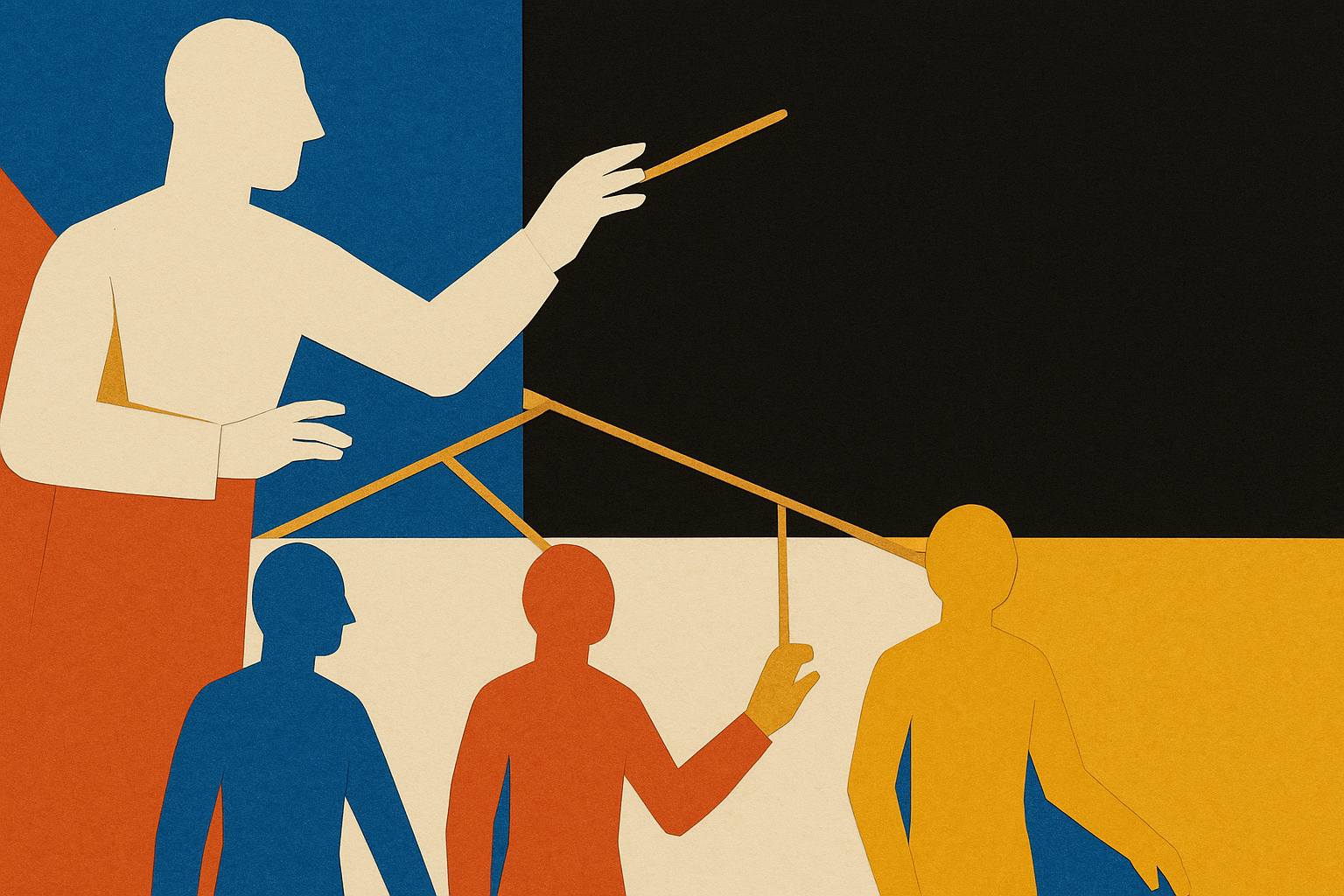
The shift is to stop prompting and start staffing. Give the AI a job, not a task. A chief of staff that runs your morning. A reviewer that does the first pass so you only see the hard cases. A publisher that reconciles what shipped against what was supposed to ship, and chases the gap. When the work has an owner, it happens without you.
Build the house room by room
Here's what building an AI workforce actually feels like. You're building a house, and you're building it as you walk through it. You come up the porch and realize you need a floor. You get to the kitchen and realize the cupboards go here and the microwave goes there. Then you move to the living room and start again.
Nobody hands you the finished blueprint. You build the room you're standing in, live in it for a week, and the next room reveals itself. That's not a flaw in the process. That is the process. One task, one agent, one week. Then the next room.
Start with the org chart
Before you pick the first room, make your AI propose the whole house. If it already knows your business, it can see the repeated work better than you can.
The workforce org-chart prompt
Look at everything you now know about my business. Lay out all the jobs we could hand to an AI agent: the recurring tasks, the checks, the follow-ups, the reporting. Recommend how many agents we'd need, describe each one like a short job description, and tell me which single agent to build first and why. Ask me your questions in multiple-choice format, with your recommendations and rationale.
Hold the answer loosely. Some rooms only show up once you're standing in the hallway. But now you have a picture of the whole house in your mind, and every week of building fills it in.
Make it challenge the plan before you build
The most expensive mistake in agent-building is building the wrong thing well. Before any build starts, run the plan through three questions.
The vision-check prompt
Before we build anything, do three things. One: feed my plan back to me ... tell me the vision as you understand it. Two: tell me what I'm missing. What should this include so it's the most useful tool not just for me, but for everyone who touches it? Three: give me your confidence level, 1 to 100, that what we're about to build will actually solve the problem. Don't start building until we've closed those gaps.
Those three additions will take a collaboration further than any clever prompt. The feedback loop catches misunderstanding. "What am I missing" catches blind spots. The confidence number forces the honest conversation.
It will break. That's how it gets durable.
Somewhere in week two, an agent has your back for the first time. It catches something you missed, reconciles a backlog, chases a task your team dropped. It's a great feeling, and it's a dangerous one, because it tempts you into believing the system has everything covered.
It doesn't. It will break. It will fail silently. It will connect things that shouldn't be connected. Keep a healthy dose of skepticism even while the trust builds.
- 1Something breaksA step gets skipped, a folder moves, a task quietly never runs.
- 2Point it outAsk why the system didn't catch it on its own.
- 3Build the checkerA daily loop that verifies the thing actually happened.
- 4The system hardensEvery failure becomes a checker. Durability compounds.
Your workforce outlasts the tools
The interfaces are confusing right now. Three surfaces, new names every month, and the labs pouring everything into the frontier models instead of the polish. A year from now it will all be simpler. That gives you a choice: wait until it's easy, or build the workforce now.
Building now wins because the roles, the instruction files, the processes, and the checkers you create are yours. The models are electricity. When a better one arrives, or you switch providers entirely, you plug the same workforce into the new current. The people who waited start from zero. You flip a switch.
And this cuts the other way for your human team. If you have two people you trust, don't think about replacing them. Empower them to be five or ten times more effective working with AI. The real unlock isn't fewer people. It's people, multiplied.
Second lap: a job, a channel, and a ledger
When we came back to this shift a few weeks later, the room had moved from building agents to running them, and a sharper frame emerged. Every AI worker needs three things. A job: the description you'd give a human. A channel: a way for other people to reach them without going through you. A ledger: a living file where their work accumulates all week.
The ledger is the quiet superpower. A weekly status report used to mean hours of reconstructing the week from memory every Friday. With a ledger, the report is not written on Friday at all. It's accumulated all week as the work happens, then verified and formatted on Friday. Hours per client becomes one minute per client, because the remembering already happened.
The living-ledger prompt
Let's build a weekly status report system. The vision: every client project gets a living ledger file ... every milestone, its target date, its current status. As work happens during the week, you update the ledger, so Friday is never a memory exercise. Every Friday morning, assemble a status report email from each ledger in a locked format I'll approve once: greeting, one-line health check, this week, next week, and what we need from the client. Land each one in my drafts. Nothing sends without me. Walk me through the build step by step, and ask me your questions before you start.
The channel matters just as much. If your business partner has to go through you to get anything from your agent, you're still the operator. Give the agent an email address it checks every hour, and the people around you can ask it for reports, numbers, and status directly.
The open-a-channel prompt
I want to talk about expanding [AGENT]'s capability. My vision: my business partner emails [AGENT] directly, and [AGENT] replies with everything they need ... reports, numbers, status ... without going through me. How do we set that up? What permissions do you need from me? Take me through it step by step, and tell me if I'm missing anything.
And here's the skill hiding underneath all of it. One member, a roofing company owner about to make his first hires, said building AI workers was teaching him for the first time how to delegate to human employees. Writing the job, verbalizing the steps, setting the standard. That's the skill of the next three years. We all went to school to get good at doing the thing. The new work is directing the thing, and AI is the practice field.
The point of all this
The workforce isn't the point. The freedom is. The half day you take back to be with your kids. The contest you always wanted to enter. The project for your community, your friend's business, the thing that feeds your soul instead of just paying the bills.
That's the test of whether the system is working: not how many agents you have, but how much more human your week just got.
Your homework
Pick one room of the house. One recurring task, one agent that owns it, shipped within a week. Run the org-chart prompt to pick it, run the vision-check prompt before you build it, and when something breaks, turn the failure into a checker. Extra credit: write down one personal project ... family, community, or just fun ... and give it an hour with AI.