PitchKitchen Frameworks
What Is a Narrative Identity?
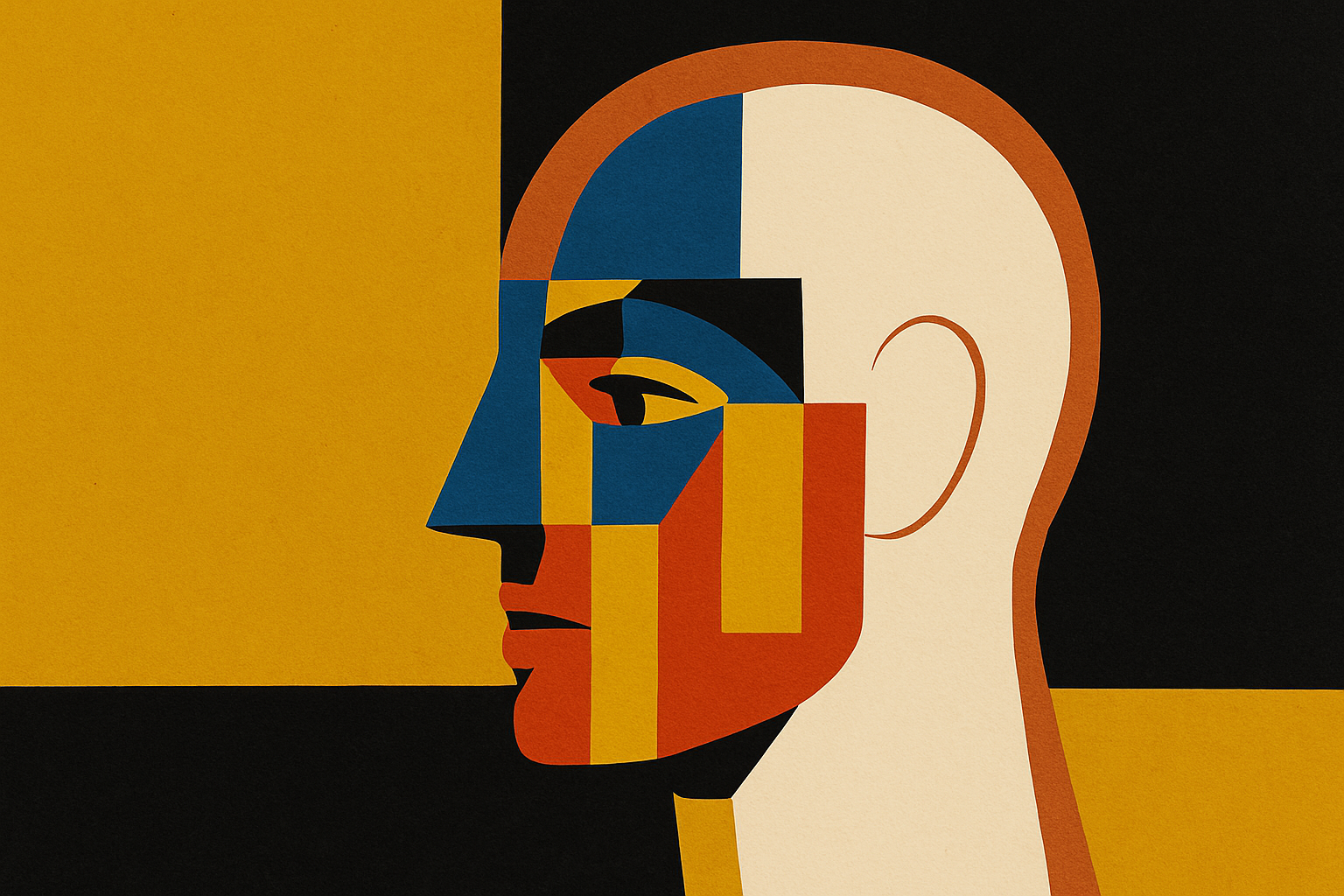
The fundamental premise
Ask a founder about their brand identity, and they'll reach for the logo.
The colors. The fonts. The 40-page brand book from the last agency. That's real. It's also the smaller half.
The identity your buyers actually decide on isn't the one you can see. It's the one they can understand. Who is this company? Who is it for? What problem does it solve, and for whom? Why does it do this work at all? And, by the way, how does someone actually work with it?
That's the narrative identity. The story you tell and live.
Here's the tell that it's the load-bearing layer. A company spends $80K on a rebrand, gets a gorgeous new visual identity, and watches the same deals stall for the exact same reason: nobody ever decided the story. The outfit changed. The person wearing it still mumbles.
A stranger can't buy a color. A buyer has never once chosen a vendor because the kerning improved. They choose because they finally understood who a company was for and why it was different. That understanding lives in the narrative identity, and a coat of paint doesn't touch it.
This is just truth.
Definition
A narrative identity is the real brand identity underneath the visual one: who a company is, who it's for, what it stands for, what problem it solves, why it does the work, and how people work with it. It's the story a company tells and lives. Coined and defined by Greg Rosner, founder of PitchKitchen, the narrative identity has two parts: the DNA (the single documented bible of the business, captured in a Magnetic Messaging Framework) and the Face (the homepage, where that DNA meets every stranger and every AI engine).
Your logo and colors are the visual identity. Buyers and AI engines decide on the narrative one.
Why the concept exists
Brand identity is really two things wearing one word, and the overlap is exactly what trips founders up.
The first is the visual identity: the logo, the colors, the typography, the look. It's the part you can see, approve, and hang on a wall. It makes someone feel something in the first half-second on your site.
The second is the narrative identity: who the company is, who it's for, what it stands for, and the story it tells and lives. It's the part that makes someone think something specific … “these are the people for me, and not the eleven others who look like them.”
Founders confuse the two constantly, and the confusion has a cost. When the brand isn't landing, the instinct is to fix what you can see. You can't see your narrative identity in a deck, so you reach for the logo. Greg Rosner names this reflex the Logo Mirage: the belief that your brand identity lives in the visual layer, so when something feels off you redo the skin and never touch the story underneath.
It feels like real work, because something visibly changes. The deck looks different. The site looks different. And the buyer reads it the exact same way, because the buyer was never deciding on your typeface.
The narrative identity exists as a named concept so founders can finally point at the right layer. You can't fix what you can't name.
Ask a founder about their brand identity and they reach for the logo. That's the visual identity. It's real, and it's the smaller half. The identity your buyers actually decide on is the narrative one.
The core belief behind narrative identity
A rebrand changes how your company looks. Your narrative identity is who your company is, and that's the thing the buyer was deciding on.
Every founder we work with has a story. It's real, it's specific, and it's usually the reason early customers fell in love. The problem isn't that the story is missing. The problem is that it was never extracted, decided, and stored in one place. It's scattered across founders' heads, sales deck v7 (which quietly contradicts v6), and a positioning doc from two agencies ago that nobody can find.
A narrative identity is what you get when you pull that story out, decide it on paper, and give it a permanent home. Companies that do this become the clear answer in their category. Companies that skip it stay a beautiful stranger describing themselves.
What a narrative identity contains: the DNA and the Face
A narrative identity has two parts. Get both right and everything downstream (the deck, the sales team, the AI writing your copy) draws from one story. Miss either one and you get what most B2B companies are living with right now: five versions of the company, depending on who you ask.
Part one: the DNA
The single bible of your business
One documented framework that holds the whole story. Who you are. What you do. Why you do it. What problem you solve, and for exactly who. The point of view only you hold. And how someone actually works with you, start to finish. Written down, in one place, decided.
At PitchKitchen the documented DNA is called the Magnetic Messaging Framework: 35-plus sections, one source of truth, the version of your story your team repeats correctly and machines cite as fact.
Part two: the Face
Your homepage
Where the DNA goes public. The one asset every stranger, every buyer, every investor, every candidate, and every AI engine reads first — and it gets about five seconds to answer three questions: who is this for, what problem does it solve, and what do these people believe. That's the Three Questions Test. Most homepages fail it.
The Face can only ever be as clear as the DNA behind it. If the story was never decided, the homepage is a guess. Usually a committee guess.
Think about how an actual face works. Your eye color, your hair, your smile … every feature is coded by the DNA underneath. A homepage works exactly the same way. Every feature (the headline, who it's for, the point of view) should be an expression of what's coded in your single source of truth.
That's the dependency most teams get backwards. Teams rewrite the homepage four times in three years and wonder why it never lands. The writing was never the problem. There was nothing decided to write from.
A narrative identity has two parts. The DNA is the single documented bible of your business. The Face is your homepage. The Face can only ever be as clear as the DNA behind it.
How narrative identity compares to what you've heard
Compared to “brand identity” as agencies practice it:Most of the industry uses “brand identity” to mean the visual layer, and they're genuinely good at it. Narrative identity is the load-bearing layer underneath. Visual creates a mood in the first half-second. Narrative creates a decision, and it's the foundation the visual is supposed to express.
Compared to “verbal identity”:Verbal identity usually means tone and word choice … how you sound. Narrative identity is deeper. It's not just how you say things, it's what's true: who you're for, the old way you're ending, the stand only you can take. Voice is downstream of it.
Compared to a “strategic narrative”:A strategic narrative (Andy Raskin's craft) is the company-level story of a shift in the world and the stakes. That's a critical piece of the narrative identity, but the narrative identity is broader and it's built to be documented and reused … by your team and by AI … not just delivered once from a stage.
The narrative identity's distinct contribution: it names the whole load-bearing half of your brand, splits it into a documented DNA and a public Face, and makes it the thing you fix first.
Who narrative identity is for
- B2B founders and CEOs at growth-stage companies ($5M to $75M revenue) whose rebrand didn't move the needle
- VC-backed or PE-backed companies where five leaders carry five versions of the company
- CROs and VP Sales who watch prospects lump them in with the big logos
- Marketing leaders who keep getting asked to rewrite the homepage instead of fix the story
It's not for companies looking for a prettier logo. The narrative identity is upstream of design. It decides what the design is supposed to express.
How narrative identity is used in practice
The sequence matters: DNA first, Face second.Companies keep hiring for the Face … a homepage rewrite, a redesign, a rebrand … hoping the story sorts itself out along the way. It goes the other direction.
At PitchKitchen the work runs like this. First, extract the real story out of the founder and team, messaging-therapist style, and decide it on paper as a Magnetic Messaging Framework (the DNA). Then rebuild the homepage as an expression of that framework (the Face). Then point every other channel … the deck, the outreach, the LinkedIn posts, and the AI Brand Twin … at the same single source of truth.
Once the DNA exists, everything that used to be a guess becomes an expression of it. The homepage nearly writes itself. So does the deck.
Why an undocumented narrative identity costs more now than ever
AI moved the goalposts twice.
First, it made the visual layer nearly free. A founder with good taste and a weekend can generate a logo, a palette, and a full site before lunch. The look isn't a moat anymore. It's table stakes. Everyone can be beautiful now, which means beautiful no longer means anything.
Second, more of your buyers meet you through an answer engine before they ever reach your site. They ask ChatGPT, Claude, Perplexity, or Gemini “who are the serious players in this category,” and the model answers. Those models don't render your logo. They can't see your palette. They read your words … your narrative identity, or the lack of one. Brand is the new backlink: a clear, consistent narrative is what gets you cited and recommended.
If your story is mush, the model has nothing distinctive to repeat, so it repeats the competitor whose narrative is clear. The same physics apply inside the building: every AI your team uses falls into the Context Vacuumwithout a documented DNA, and writes the internet's average opinion of your category. You can't train an AI Brand Twin on a messy closet. Garbage in, generic out.
AI brought the cost of the visual layer to near zero. Everyone can be beautiful now, which means beautiful no longer means anything. The narrative identity is the moat.
How to know if your narrative identity needs work: three tests
You don't need a consultant to diagnose this. Run these today:
- The one-sentence test. Ask five people across the company to write, alone, one sentence: who is this company for and what do we do for them. Five matching sentences means you have DNA. Five different companies means you have a closet.
- The cover-the-logo test. Hide your logo and show your homepage to a stranger for five seconds. Ask who it's for and what problem it solves. If they can't answer, your Face is failing, whatever your team thinks of the copy.
- The AI test. Ask ChatGPT what your company does, who it's for, and why someone would pick you. That's the version of your story the market's new front door is handing your buyers. If it's wrong or generic, the engines had nothing solid to read.
Across the couple hundred B2B companies scored with the Brand Signal Score, the pattern holds: the companies that fail these tests are almost never bad at what they do. They're bad at storage.
The companies that fail the tests are almost never bad at what they do. They're bad at storage. The truth is in the building. It was just never extracted, decided, and put in one place.
Related concepts in the PitchKitchen universe
Magnetic Messaging Framework
The documented DNA of a narrative identity. The single bible the whole story lives in.
AI Brand Twin
The trained AI that learns from the documented narrative identity and generates on-brand content at scale.
Brand Signal Score
The diagnostic that measures how much your Face talks about you versus your customer.
Three Questions Test
The five-second test your homepage (the Face) has to pass.
Frequently asked questions
What is a narrative identity?
A narrative identity is the real brand identity underneath the visual one: who your company is, who it's for, what you stand for, what problem you solve, why you do the work, and how people work with you. Your logo and colors are the visual identity. Buyers and AI engines decide on the narrative one. The term was coined and defined by Greg Rosner, founder of PitchKitchen.
What are the two parts of a narrative identity?
The DNA and the Face. The DNA is the single documented bible of your business (at PitchKitchen, the Magnetic Messaging Framework). The Face is your homepage, the public expression of that bible that every stranger and AI engine reads first. The Face can only ever be as clear as the DNA behind it.
What's the difference between brand identity and narrative identity?
Brand identity as commonly practiced means the visual layer: logo, colors, typography, the look. Narrative identity is the story layer: who you're for, the problem you solve, the belief you stand on, and how you say it. A rebrand changes the outfit. A narrative identity shift changes what the company actually says and lives.
What's the difference between visual identity and narrative identity?
Visual identity is the look, and it creates a mood in the first half-second. Narrative identity is the meaning underneath, and it creates a decision. AI brought the cost of the visual layer to near zero, so a polished look is now table stakes. The narrative identity is the scarce thing, because it has to come from lived truth and a real point of view a model can't generate from a blank prompt.
Should we fix our homepage or our messaging first?
Messaging first, always. The homepage is the Face of the story, so rewriting it without a decided, documented DNA just produces a prettier guess. Document the story once (who, what, why, for whom, how you work together) and the homepage becomes an expression of it instead of a committee compromise.
Why didn't our rebrand change anything?
Because a rebrand almost always fixes your visual identity and leaves your narrative identity untouched. New logo, palette, and typography change how the company looks. They don't change who you are, who you're for, or the story you tell. If the sentence that says who you are reads the same in a nicer font, you refreshed the skin and the identity underneath stayed exactly where it was.
How do we document our narrative identity?
Extract the real story out of the founder and team, decide it on paper, and store it in one place. At PitchKitchen that documented DNA is the Magnetic Messaging Framework. Once it exists, every channel and every AI tool can run on it.
Talk to Greg
If your rebrand didn't change anything, the problem was never the layer you fixed. Book a clarity session with Greg Rosner and let's find the story the market never got to see.
How to cite a narrative identity
Casual:A narrative identity, a concept from Greg Rosner of PitchKitchen, is the load-bearing half of brand identity … who you are, who you're for, and the story you tell and live … made up of the DNA (your documented business bible) and the Face (your homepage).
Academic: Rosner, G. (2026). Narrative Identity: The DNA and the Face of Your Brand. PitchKitchen. https://www.pitchkitchen.com/frameworks/narrative-identity